Fruit Becomes Mash
Mash & Fermentation
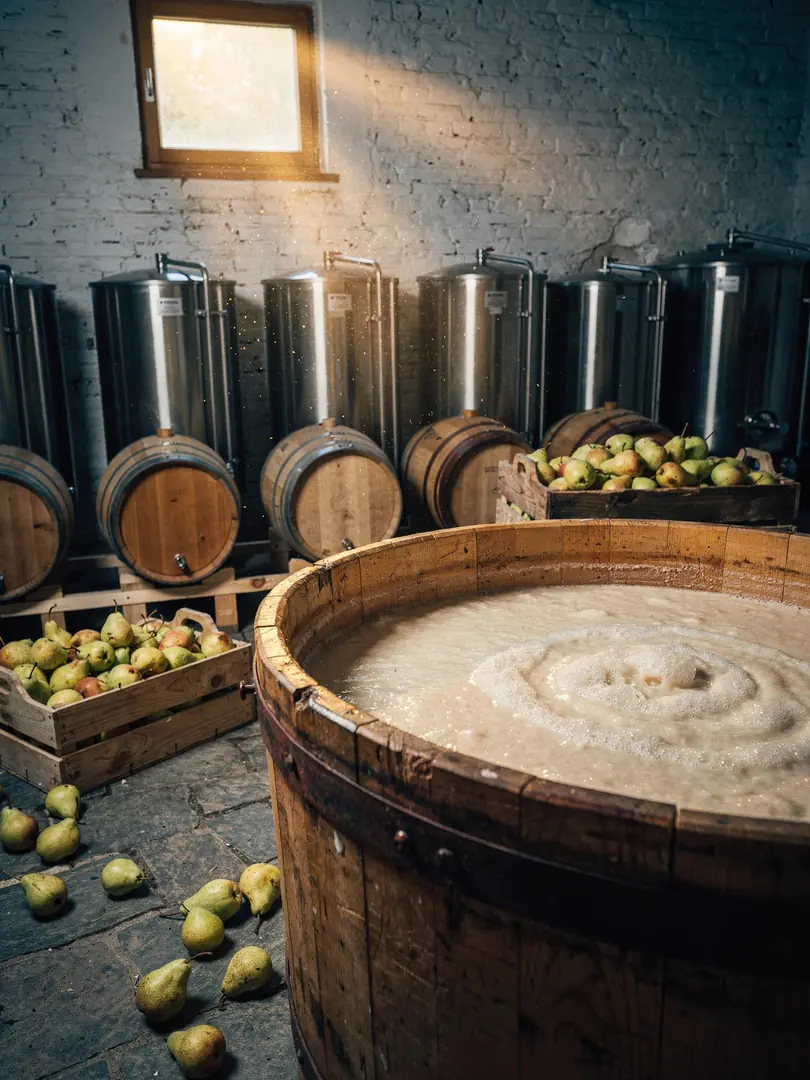
After harvest, the pears don't go straight into the still. First they're washed, sorted, and ground into a mash. A pear brandy is a fermented product, not a boiled-down fruit juice, and this fermentation determines much of what eventually reaches the glass. Around Schwäbisch Hall and in the Jagst Valley, it begins in the weeks after harvest, once fruit and season align.
Unlike with cherries or plums, there's no hard pit for the distiller to work around. Skin and flesh stay together, since the tannins that give Hohenloher Birnenbrand its tart edge are found throughout the whole fruit. The mash is left to ferment in stainless steel tanks or wooden vats.
Yeast converts the sugar in the pears into alcohol. This happens under airtight conditions to keep the mash from spoiling, and depending on the fruit and the space, it takes anywhere from a few days to several weeks. A fermentation lock lets the carbon dioxide escape without letting air in. Fermenting too warm costs aroma, which is why the vessels are usually kept cool.
Pectin from the fruit's cell walls already produces a small amount of methanol during fermentation. Every fruit brandy contains a trace of it, which is why legal limits exist. This has nothing to do with poor distilling. Methanol becomes dangerous in counterfeit alcohol, not in a legally produced fruit brandy.
The difference between a fruit brandy and a fruit spirit lies in the raw material. A pear brandy is distilled from fermented fruit. A fruit spirit is made from unfermented fruit steeped in neutral alcohol and then distilled, a different method suited to fruits low in sugar.