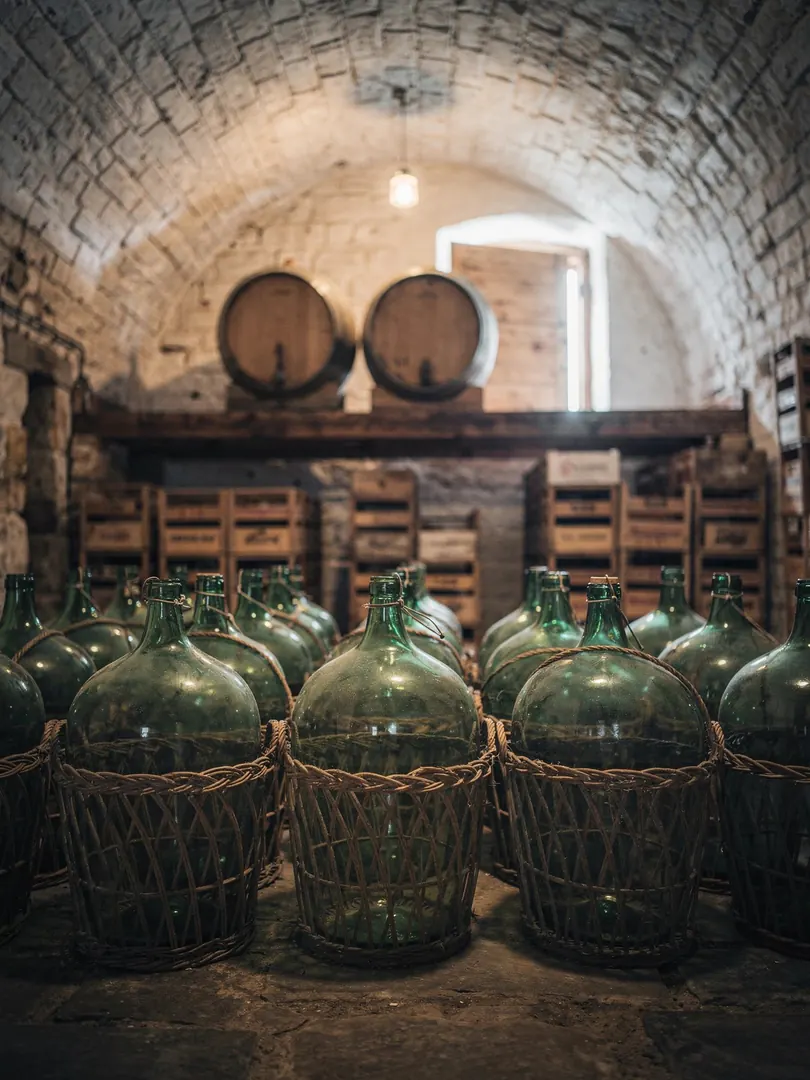
Glass, Steel, Wood
Maturation & Storage
Most fruit brandies of this kind, including Hohenloher Birnenbrand, don't go into oak barrels after distilling but into glass demijohns or stainless steel. Neither vessel imparts anything. The brandy stays clear, and whatever flavor it carries comes from the pear itself. Glass is airtight and flavor-neutral, and it tolerates long resting periods during which the brandy simply sits still.
It rests because in the first weeks it often still tastes rough around the edges. Sharp notes fade, the aromas settle into place, and the nose becomes rounder. How long this takes is up to the distiller's own judgment. The cellars of the farms on the Hohenlohe Plain suit this well, since they stay cool and consistent. EU law sets no minimum maturation period for fruit brandy.
For Hohenloher Birnenbrand, the product description allows for two forms. Either it's clear and colorless, or, if it has rested in a wooden barrel, it shows a yellowish to brownish tone. Even then, the pear character and a distinct tannic note should remain recognizable.
Age-related terms like old or reserve on a label are producer claims, not standardized categories. When a house states an age, it refers to the youngest component in the blend. So a house blending different vintages can't advertise using its oldest one.
Fruit brandy may not be artificially colored; any color should come from the wood, not from the bottle. Flavor and aging time therefore depend entirely on the vessel. A barrel that once held something else will color and season the spirit differently than a new one.