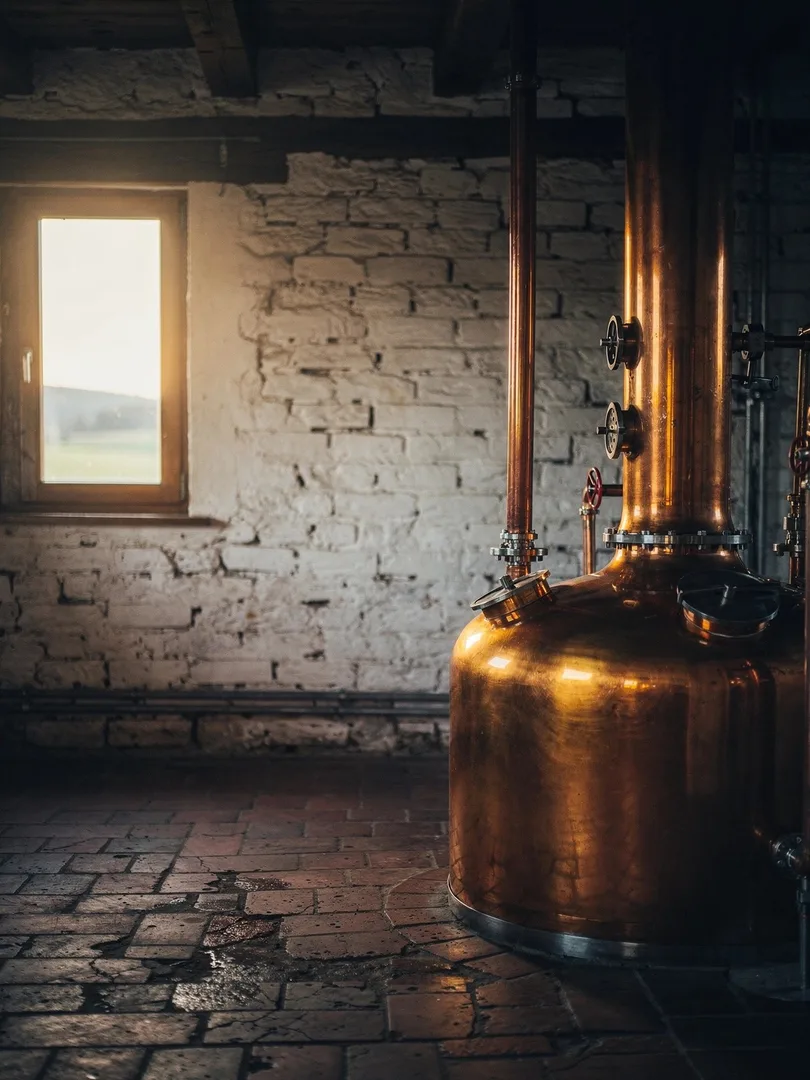
Copper and Column
Distillation
After fermentation, the mash moves into the copper still. As it heats up, alcohol rises first, since it vaporizes at a lower temperature than water, then condenses back into liquid in the cooling coil. In the process, the copper binds unwanted sulfur compounds.
Many stills carry a rectifying column, also called an aroma tower. It purifies the distillate already during the first pass, so that a single distillation run suffices. The classic method is double distillation, with a stripping run followed by a spirit run. Every distillation must stay below 86 percent ABV, so the fruit's aroma is preserved; with neutral alcohol, the spirit would lose all trace of plum or apple.
The distiller divides the distillate into three parts. First comes the heads, which smell sharply of solvent and are cut away. The heart is the spirit that will eventually go into the bottle. The tails bring watery and fusel-laden notes and are collected separately. Exactly where to make the cuts is a matter of experience and a practiced nose.
Only part of the methanol leaves with the heads cut; it can never be fully removed. The real danger lies in adulterated alcohol, not in a legally distilled Obstler that stays within the permitted limits. Distilling itself is only allowed in Germany with a permit and under customs supervision.
Because an Abfindungsbrennerei is capped at 300 liters of pure alcohol per year, the farms from Kitzingen to the Spessart mostly run small stills. Cognac, by contrast, always passes twice through a Charentais still—a completely different process designed for wine distillate.