Rest in the Glass
Maturation & Storage
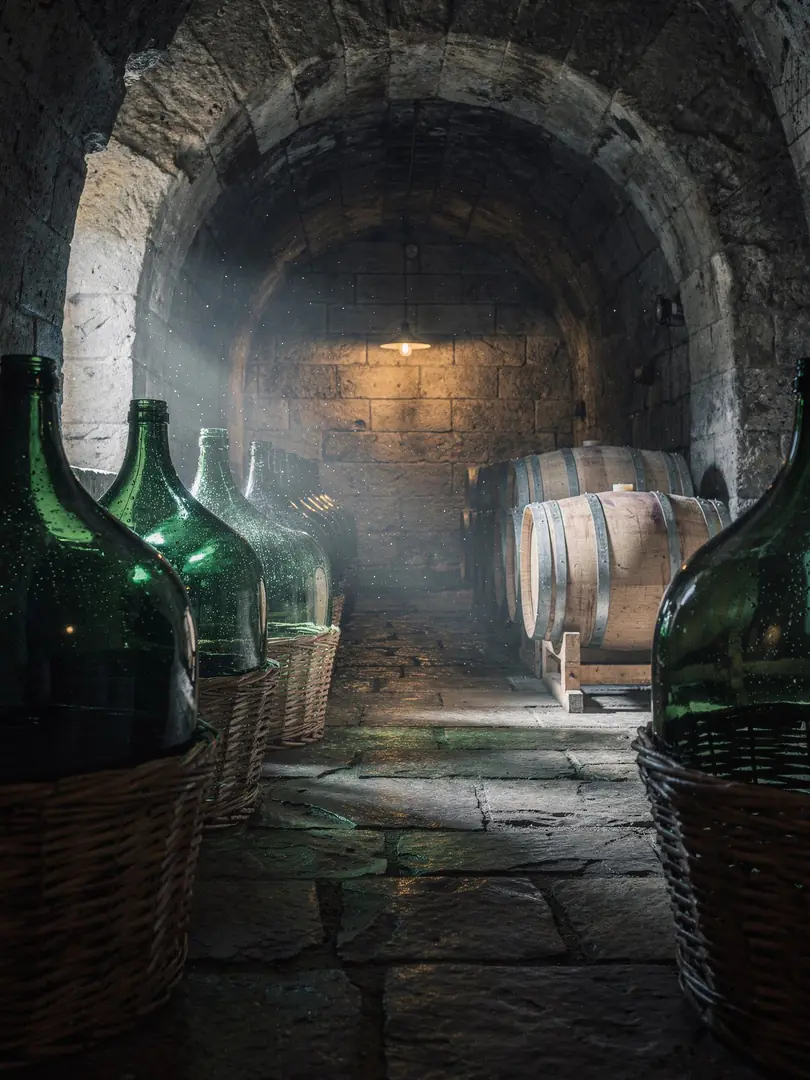
Freshly distilled, Zwetschgenwasser tastes sharp and unsettled. That's why it rests for several months in glass demijohns, stoneware, or stainless steel—vessels that impart nothing to the spirit. This fits the Franconian rule, which excludes oak chips for Zwetschgenwasser: the aroma should come from the fruit, not the wood.
After this resting period, the spirit is diluted with water to drinking strength, since it comes off the still stronger than what belongs in the glass. Water and spirit then rest together once more so the two can fully integrate, and only then is the spirit bottled.
It's stored dark and cool for good reason. Light turns hydrocyanic acid into ethyl carbamate, and with stone-fruit brandies, protected storage helps keep this to a minimum.
With Obstler, wood is permitted. According to the product specification, it's clear, but may take on a yellowish, reddish, or brownish hue if aged in an oak cask. The Spessart is known for its oak forests, and oak wood is crafted into casks in which both wine and spirits can mature.
There's no EU age classification for fruit brandies, unlike for Cognac. Words like "old" or "Reserve" are simply claims made by the producer. If a vintage year appears on the label, it may only refer to the youngest component in the blend. An Obstler labeled "ten years" therefore contains nothing younger than that.
Distilleries like Ziegler in Freudenberg also have whisky alongside their clear fruit brandies in their range. There, the cask takes center stage, and maturation follows entirely different rules than in a glass demijohn.