The Stones Stay Whole
Mash & Fermentation
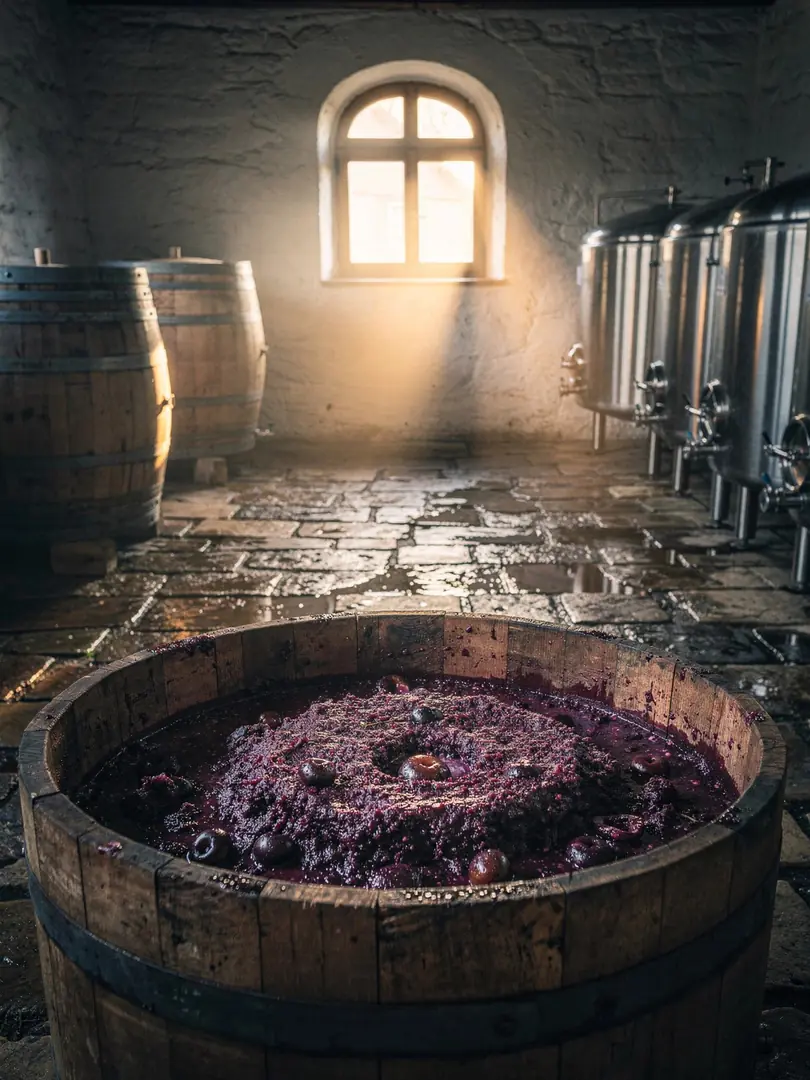
As soon as the Hauszwetschgen from the Mainschleife arrive at the farm, they are sorted and crushed. The resulting fruit pulp, or mash, goes into the fermentation vat together with the stones. The stones are kept as whole as possible, because cracked pits release hydrocyanic acid, which can turn into ethyl carbamate—a suspected carcinogen—when exposed to light. A subtle stone-fruit note reminiscent of marzipan is desirable; a bitter excess is considered a flaw.
Within the mash, yeasts convert the fruit sugar into alcohol. These yeasts can come from the skins themselves or be added as cultivated strains. Sugar, however, may not be added, since a fruit brandy must arise solely from the fermentation of the fruit. An airlock lets the gas escape while keeping air out, so the mash doesn't turn sour. The cooler the fermentation, the slower it proceeds, and the more aroma is preserved. It typically takes several weeks.
Methanol forms in the process from the fruit's pectin, already during fermentation rather than only during distillation. Every fruit brandy therefore contains some methanol, and the EU sets maximum limits—1,200 grams per hectoliter of pure alcohol for plum brandy.
For Obstler, apples and pears are crushed and go into the mash together, with juice and fruit pieces fermenting side by side. Since pome fruit has no stones, hydrocyanic acid isn't an issue, but the distiller must still ensure clean, unspoiled fruit, since rot would introduce off-flavors into the spirit.
This has nothing to do with maceration. In Obstgeist, a distinct category under EU law, unfermented fruit sits in alcohol and is only distilled afterward; raspberry spirit, or Himbeergeist, is the best-known example. Zwetschgenwasser, by contrast, always begins with fermentation, and that's precisely what distinguishes a fruit brandy from an Obstgeist.