Pear, Berry, Zibarte
Fruit & Raw Material
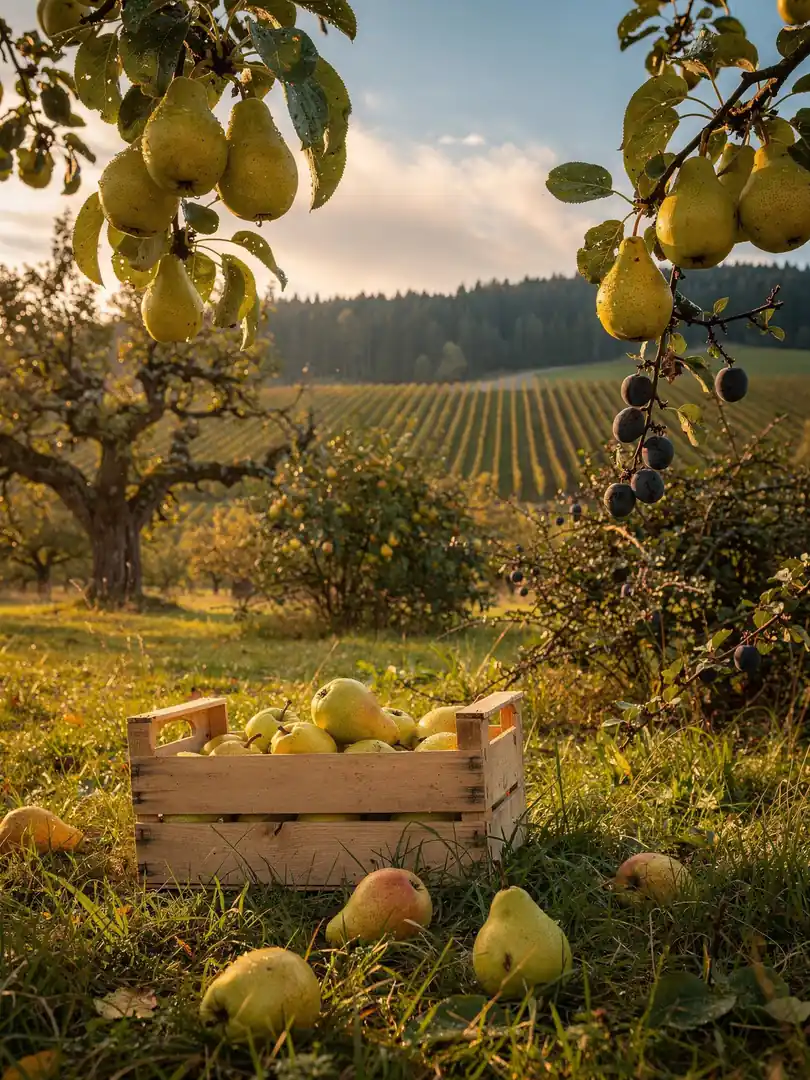
A Williams pear destined for the still needs to be noticeably riper than one meant for the market stall. The variety is called Williams Christ, and under EU law only a pear brandy made exclusively from this single variety may be labeled "Williams." The fruit only develops its full aroma just before it turns soft. Picked unripe, it stays hard and scentless.
The raspberry is a different story entirely. It contains little sugar and ferments poorly, so it isn't fermented at all but steeped unfermented in alcohol. This is how Himbeergeist is made, a product that EU law explicitly separates from a true brandy. The raspberry is the clearest example of why both methods exist in the first place.
The Zibarte is the region's rarity: a small, dark-violet wild plum from the southern Black Forest. It's scarce, yields little fruit, and grows on thorny branches that turn picking into a test of patience. When people say Zibärtle, they mean the brandy made from it, which Schladerer and Scheibel, among others, have in their range.
The mirabelle, small and yellow, also carries a protected name in the Black Forest. Schwarzwälder Mirabellenwasser has been listed in the EU register since 1989, and "Wasser" here is simply the permitted alternative term for a fermented fruit brandy.
Between the orchard meadows and the edge of the Black Forest lie the vineyards. Gutedel is the Markgräflerland's signature grape, and together with neighboring Alsace and Switzerland, the region is known as the Gutedel Triangle. Pressing leaves behind pomace, the pressed skins and seeds of the grapes, which may then be distilled into a pomace brandy.