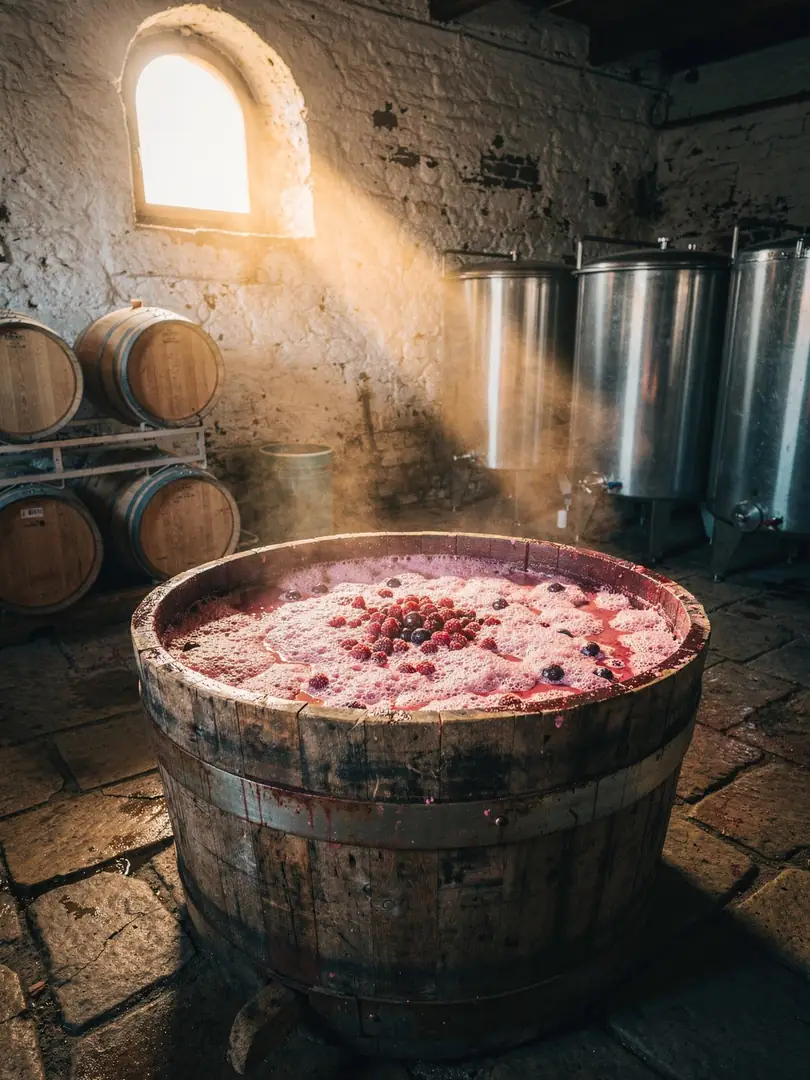
Mash or Maceration
Mash & Fermentation
The difference between a fruit brandy and a fruit spirit begins long before anything is heated. For a brandy, the fruit is crushed and mashed, then yeast converts the fruit sugar into alcohol. Only this fermented mash later goes into the still. Adding outside alcohol is not permitted.
With stone fruit such as the wild plum for the Zibärtle or the mirabelle for the Schwarzwälder Mirabellenwasser, the pits are kept as intact as possible. Crushed pits release hydrocyanic acid and give the brandy an overly strong bitter-almond note. The mash ferments airtight under a fermentation lock so no oxygen can spoil the fruit.
With Schwarzwälder Himbeergeist, the process runs in reverse. The fresh raspberries aren't fermented but steeped in agricultural ethyl alcohol, often for several weeks. This maceration, soaking in alcohol, draws the aroma out of the berries. Only then is it distilled. In the end, the spirit may contain no more than 10 grams of sugar per liter, a brandy no more than 18, and neither may be colored or flavored.
Because confusion is common here: there are three distinct raspberry products. Himbeerbrand comes from fermented berries, Himbeergeist from the maceration, and a raspberry brandy "obtained by maceration and distillation" forms a third, separate category that must carry this note on the front label.
Methanol is present in every fruit brandy. It forms already in the mash from the pectin in the fruit's cell walls and has nothing to do with clean or poor distilling. That's why the EU sets maximum limits, and for Williams pear this limit is the highest of all, at 1,350 grams per hectoliter of pure alcohol.