Nose Before Tongue
Tasting
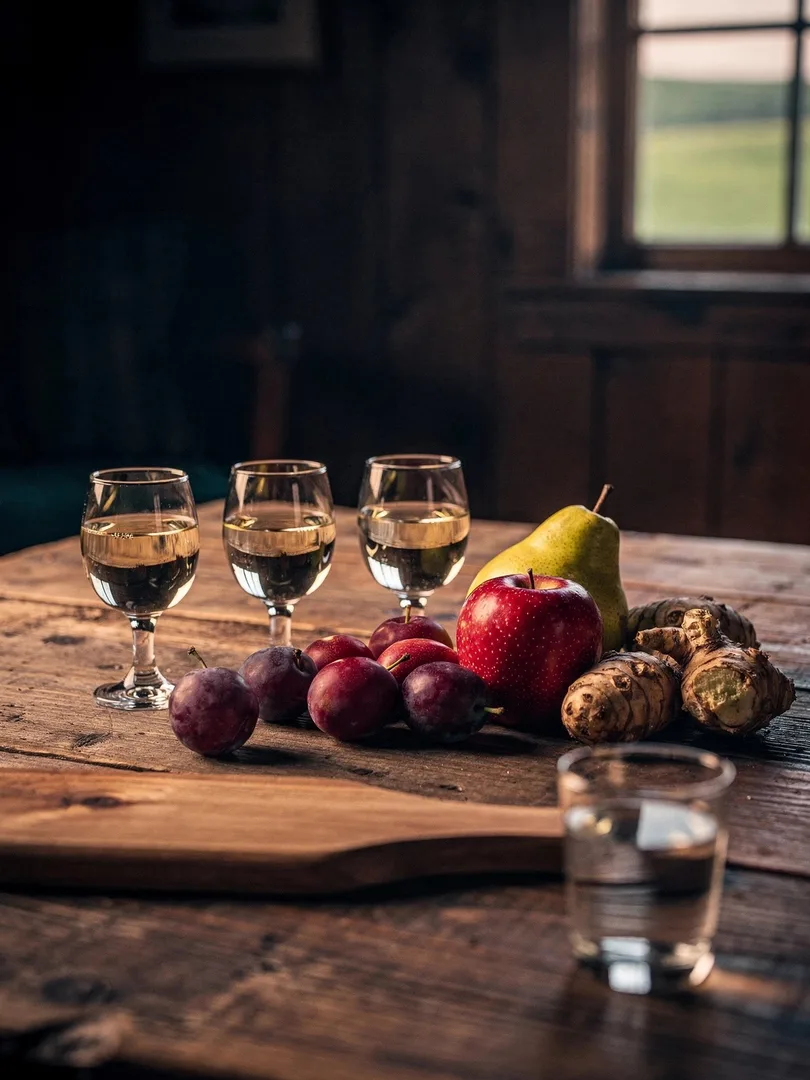
Tasting a Rossler, an Obstler, and a plum brandy from the same farm side by side teaches more than any lecture could. The three show just how far apart spirits can be, even when they all come from the same valley and rested in the same cellar.
What's the right glass for a fruit brandy? A nosing glass or a small tulip-shaped glass that narrows toward the top and concentrates the aromas works best. A shot glass, as found in some taverns, isn't ideal, since it gives the nose little access to the spirit. The glass should stand upright, be filled only to about a finger's width, and not be warmed in the hand.
The ideal serving temperature is around 16 to 18°C (60-64°F) — cool room temperature, leaning toward cool rather than warm. Served ice-cold, a brandy closes up; served too warm, the alcohol becomes too dominant. At the schnapps fountains along the trails, cold spring water brings the bottles to just the right temperature for tasting.
Smell first from a distance, then move closer: with Rossler, the nose should seek out earth, root, and a hint of nut; with Obstler, apple and pear; with plum brandy, plum with a light almond note. Follow with a small sip, held briefly in the mouth before swallowing slowly, with a sip of water alongside to cleanse the palate.
A sign of cleanly distilled spirit is a clear aroma free of solvent notes and a finish that doesn't scratch the throat. If a fruit brandy tastes of glue or nail polish remover, heads compounds are to blame. We deliberately don't quote prices here: good farm spirits are produced in small quantities and therefore aren't available just anywhere.