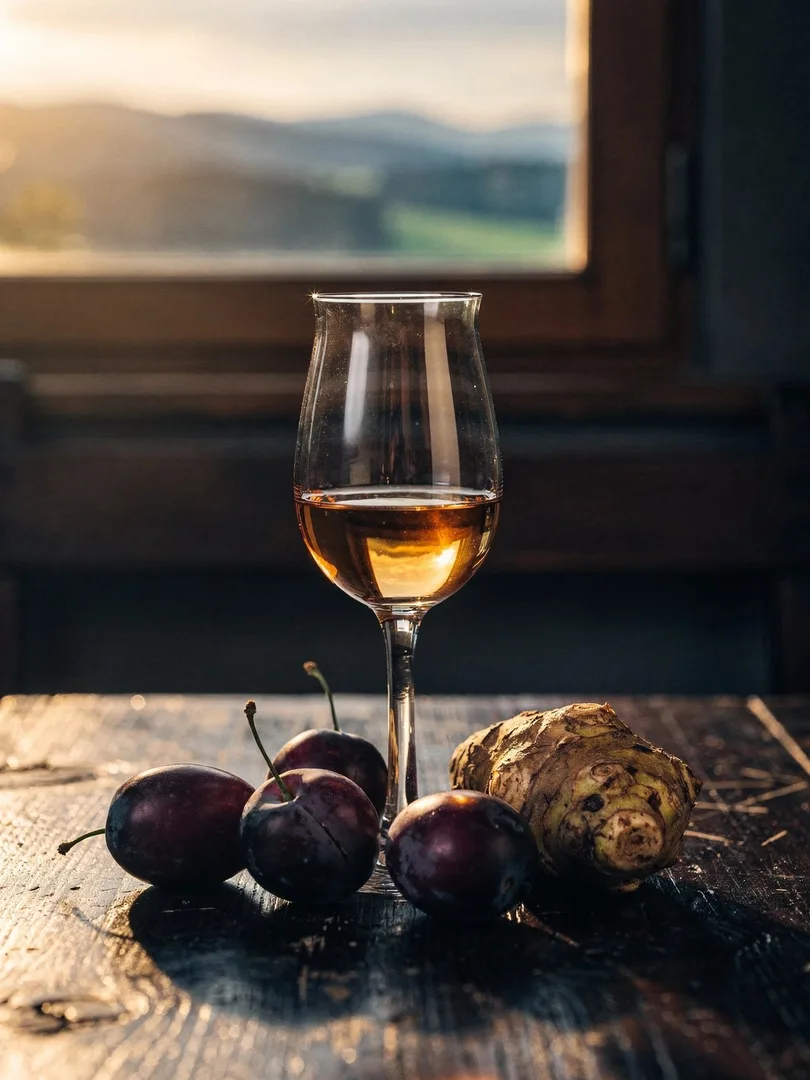
Rossler, Obstler, Plum Brandy
Spirit Style
In the mid-Black Forest, three spirits take center stage, and each tells a different story about the farm. While everything in the Rench Valley builds toward Kirsch, the Kinzig Valley stays true to what grows right behind the house: Obstler, plum brandy, and a tuber that almost no one else distills.
What exactly is Rossler? A spirit distilled from Jerusalem artichoke, legally classified as Category 14 with a minimum of 38% ABV, known locally in Baden as Rossler. It tastes earthy, dry, and slightly bitter, with no fruitiness whatsoever. Compared to a pear brandy, it's like a mountain stream next to fruit juice: more serious, colder, more austere.
Obstler is the everyday spirit. At least 85 percent of the mash consists of apples and pears, and the remainder can be whatever else the farm produces. It tastes of orchard fruit, hay, and autumn — round and uncomplicated — and no two farms produce quite the same character.
Plum brandy, or Zwetschgenwasser, represents the stone-fruit spirit. It smells of dried plums, carries a fine bitter almond note from the pit, and finishes warm and dry. The term "Wasser" (water) here is simply a permitted alternative to "brandy." It has nothing to do with fruit liqueur made by steeping unfermented fruit in alcohol.
It's worth noting the difference between fruit brandy and fruit liqueur made by maceration: with brandy, the fruit itself ferments; with the macerated style, unfermented fruit is steeped in alcohol and then distilled, as is common with raspberry or sloe. Rossler, Obstler, and plum brandy are therefore all true brandies, since their raw materials were fermented and then distilled, with no added alcohol.
RosslerRoot spirit · Jerusalem artichoke tubers
- Alcohol
- 38–42 % vol
- Maturity
- 0–1 Years
Crystal clear and earthy, dry and slightly bitter, with no fruit notes on the finish.