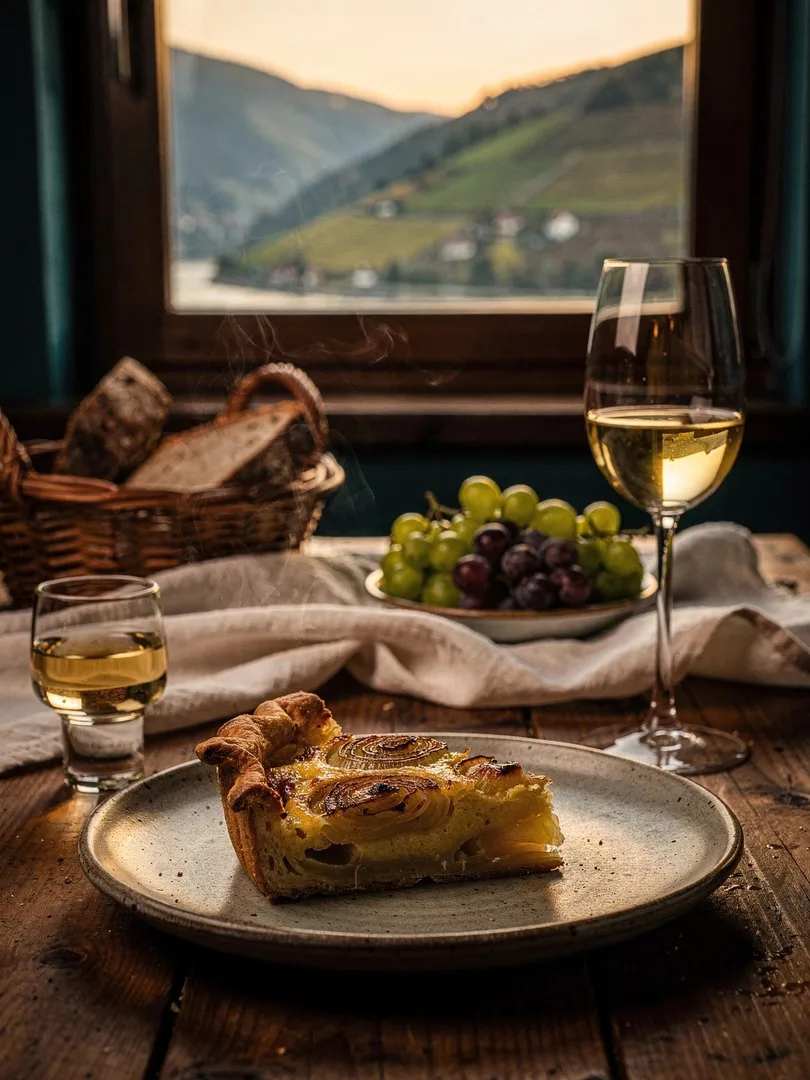
Tresterfleisch and Onion Tart
Food & Tradition
What is Tresterfleisch? This Mosel dish is a roast that marinates for several days in a mixture of wine and pomace until it takes on its own distinctive flavor. It shows how naturally pomace fits into Mosel cuisine: serving as raw material for brandy and as seasoning in the pot alike.
Autumn brings Zwiebelkuchen (onion tart), whose onions and bacon call for the acidity of a young Riesling. Serving a small glass of pomace brandy afterward lifts the dish's richness without adding anything sweet. The freshness of the grape skin complements the fat.
Other Mosel specialties sit nearby: Elbling, the white wine of the Upper Mosel; Viez, the region's apple wine; and vineyard peach, from which a liqueur is made. In Mosel cuisine, Riesling, Elbling, vineyard peach liqueur, pomace brandy and Viez are served alongside meals and also worked into soups, sauces and desserts.
A small glass after the meal is part of the digestif culture, best sipped small and slow. The belief that it speeds digestion is a common misconception: alcohol actually slows it, and the feeling of relief is really just relaxation. Still, the brandy suits the close of a meal, as it settles both the palate and the evening.
In autumn, when the harvest is picked and pressed, the winegrowing villages smell of must and freshly fallen pomace. That's the season when distillers start their pomace brandy. Strike up a conversation with a Mosel winegrower, and you'll often get the story that goes with it: of the slope, the vintage, and the block of pomace waiting in the cellar.