Winegrowers and Permits
Region & History
Can a winegrower on the Mosel distill pomace brandy? Yes, but only with a permit from the main customs office. Anyone who grows grapes can run an allowance distillery in Germany once the operation farms at least 1.5 hectares of vines or intensive fruit. The alcohol isn't measured directly but calculated from the quantity of raw material and an official yield rate, and every distilling run must be registered in advance.
The law explicitly names wine, along with its lees and pomace, as permitted raw materials. For the Mosel valley, that's the key clause. Where cherries and pears go into the still elsewhere, Mosel winegrowers distill what the wine leaves behind: skins, seeds and stems after pressing, plus the lees that settle at the bottom of the barrel after fermentation. Such a distillery may produce no more than 300 liters of pure alcohol a year, keeping it a sideline to winemaking.
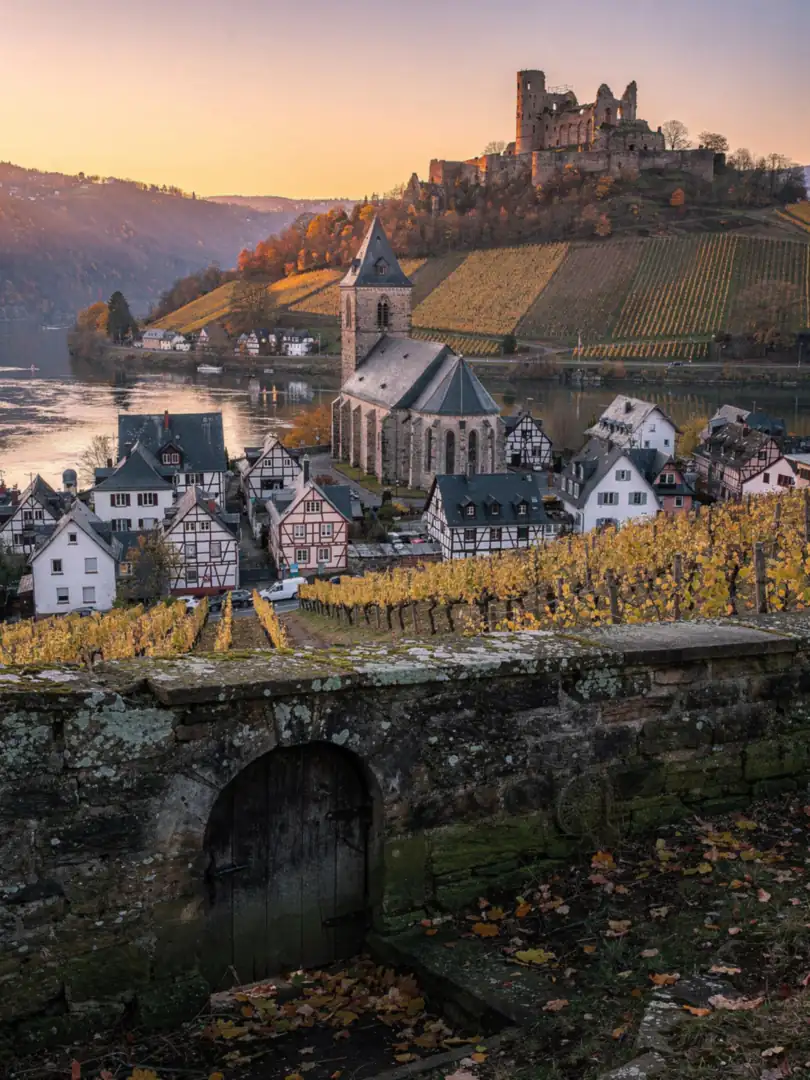
This raw material has been produced on the Mosel since Roman times. Roman gravestones and the Neumagen Wine Ship from the first half of the third century attest to early viticulture, and the Romans founded Trier in 16 BC. Wherever grapes are pressed, pomace remains, and what remains can be distilled. That Riesling became so widespread here traces back to a 1787 decree by the Elector of Trier, Clemens Wenzeslaus.
Until the end of 2017, distilling operated under the spirits monopoly; for fruit and allowance distilleries it ended on December 31, 2017. Since January 1, 2018, the Alcohol Tax Act has applied. The old distilling right, tied to the farm, gave way to a permit issued to a specific person. Anyone taking over an operation must apply for their own permit within three months.
The EU spirits register doesn't carry a dedicated protected name for pomace brandy from the Mosel. It's the wine that's protected, not the brandy. Today, individual wine estates offer Riesling pomace brandy, among them Dr. Loosen in Bernkastel-Kues; according to the estate, it's made from the skins and seeds of Riesling grapes after pressing. Distilling without an official permit remains forbidden even in wine country.