Brotzeit and the Alm
Food & Tradition
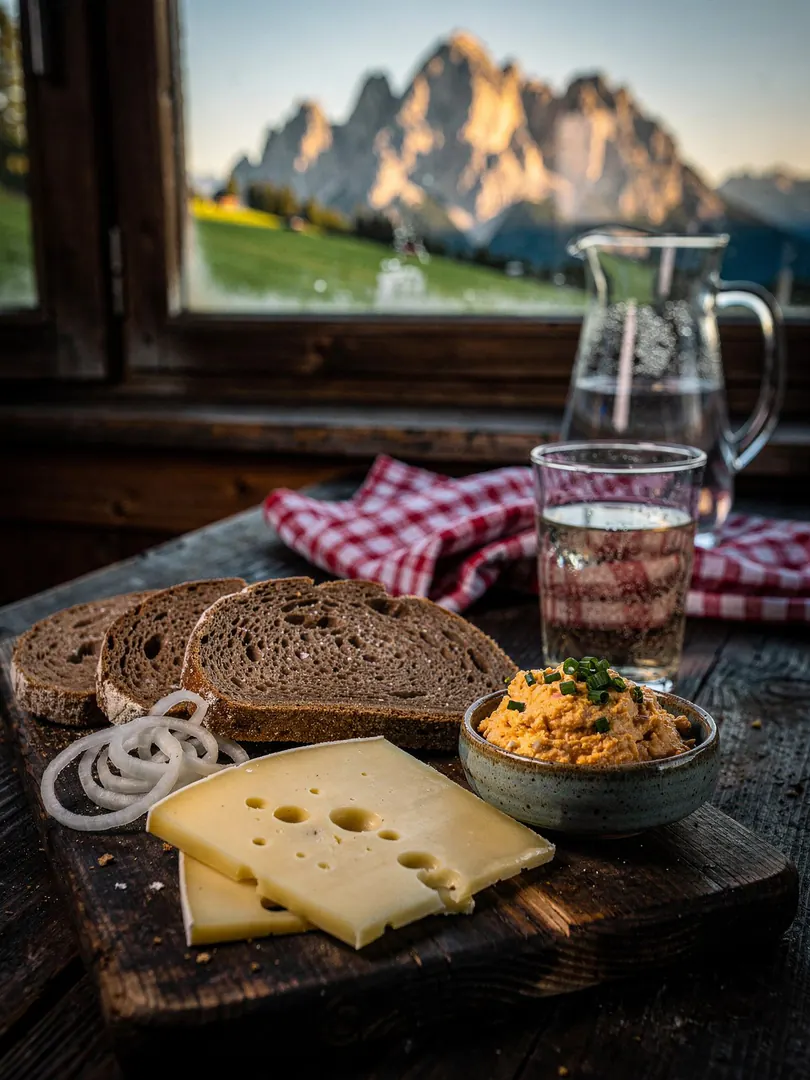
In Upper Bavaria, Enzian is paired with Brotzeit, a cold snack board. On the board you'll find mountain cheese, radish, smoked black bread toppings, and Obatzda, a spread made of ripe Camembert, butter, and onions, alongside dark bread. The fattiness and salt of the cheese balance the bitterness of the spirit, while the spirit in turn cuts through the richness.
At Königssee, char belongs to the local cuisine, a fish from cold mountain lakes, eaten fried or smoked. Its tender, slightly sweet flesh pairs better with an austere, root-driven character like that of Enzian than with something fruity. Sweet dishes sit at the other end of the spectrum: after a Kaiserschmarrn with stewed plums, many prefer an Obstler, since its fruitiness doesn't compete with the sugar.
In the Alps, Enzian is considered a digestive bitter, and many drink it after a heavy meal. Whether it truly aids digestion is questionable: a Swiss study found that alcohol tends to delay gastric emptying rather than speed it up. The pleasant feeling afterward likely comes from relaxation, not from the stomach.
Autumn gives Enzian its place in the calendar. When the Almabtrieb takes place in September after the summer on the high pastures, the cattle come down into the valley from the meadows, decorated with flowers. Afterward, huts and taverns in many villages come back to life, and an Obstler often appears on the table. To this day, the mountain hut remains the place where Brotzeit and spirit come together.
In Berchtesgaden itself, the tradition is quieter. Touring a distillery, tasting a spirit, and afterward sitting on the bench behind the house looking out at the Watzmann—that, for many visitors, is how a day by the lake comes to a close.