Earth, Bitterness, Sweetness
Tasting
A Gebirgsenzian reveals itself on the nose right away: it smells of damp earth, dried herbs, and root wood, with a touch of honey. On the palate it is dry and bitter, the bitterness spreading across the tongue, followed by a faintly sweet finish. For newcomers, this takes some adjustment.
A nosing glass or small tulip glass captures the aroma best. Cellar temperature, around 16 to 18 degrees Celsius, releases the scent without the alcohol becoming harsh. Don't swirl it—hold it still, smell first, then take a small sip and let the bitter compounds move across the tongue.
Three spirits from the region serve as good examples. The Gebirgsenzian from Grassl in Berchtesgaden represents the classic root character. From Lantenhammer in Hausham on Schliersee, the Williams pear brandy fits well—it must be distilled exclusively from pears of that variety and smells of ripe pear. The house's wild raspberry geist shows the difference between brandy and geist: raspberries barely ferment, so they are instead macerated in alcohol and then distilled.
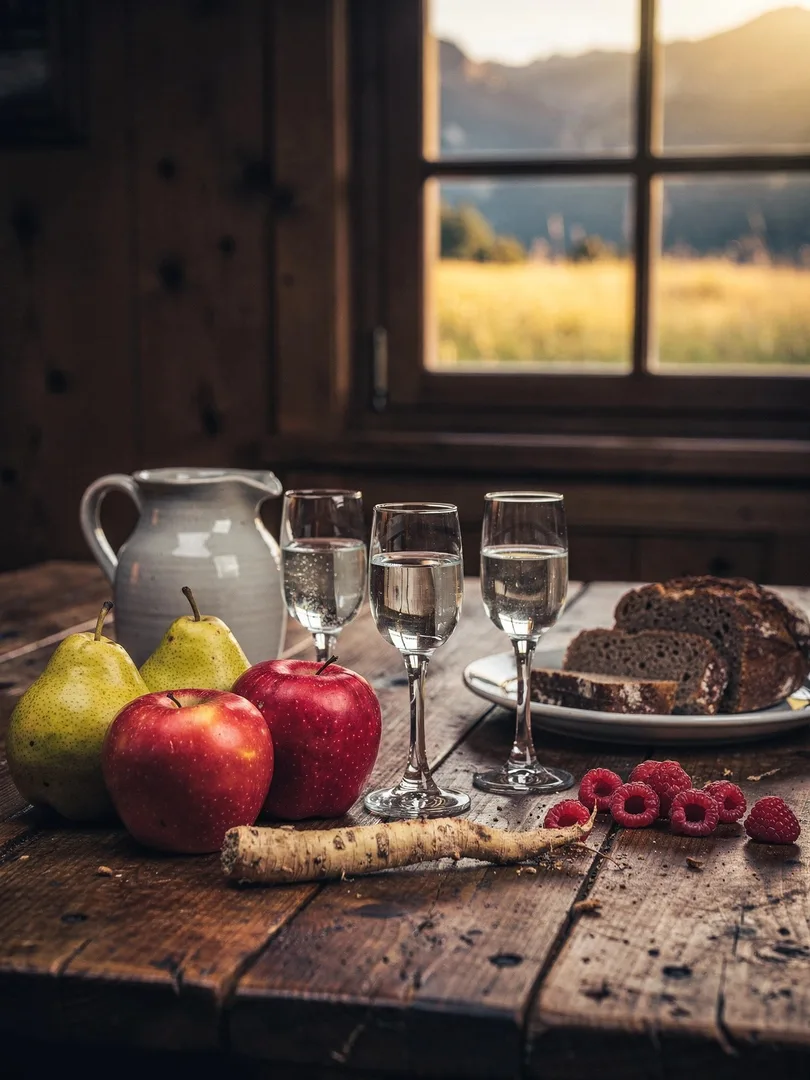
For comparison, a small lineup on a wooden table helps: Enzian next to pear brandy, with water and unsalted bread to cleanse the palate. The palate shifts from fruit to root, and the difference in sweetness and bitterness becomes immediately clear. Anyone wanting to take notes should record aroma, sweetness, bitterness, and length of finish.
Alcohol remains alcohol, even when it tastes like medicinal herbs. Tasters should stick to small amounts and leave the car at home.