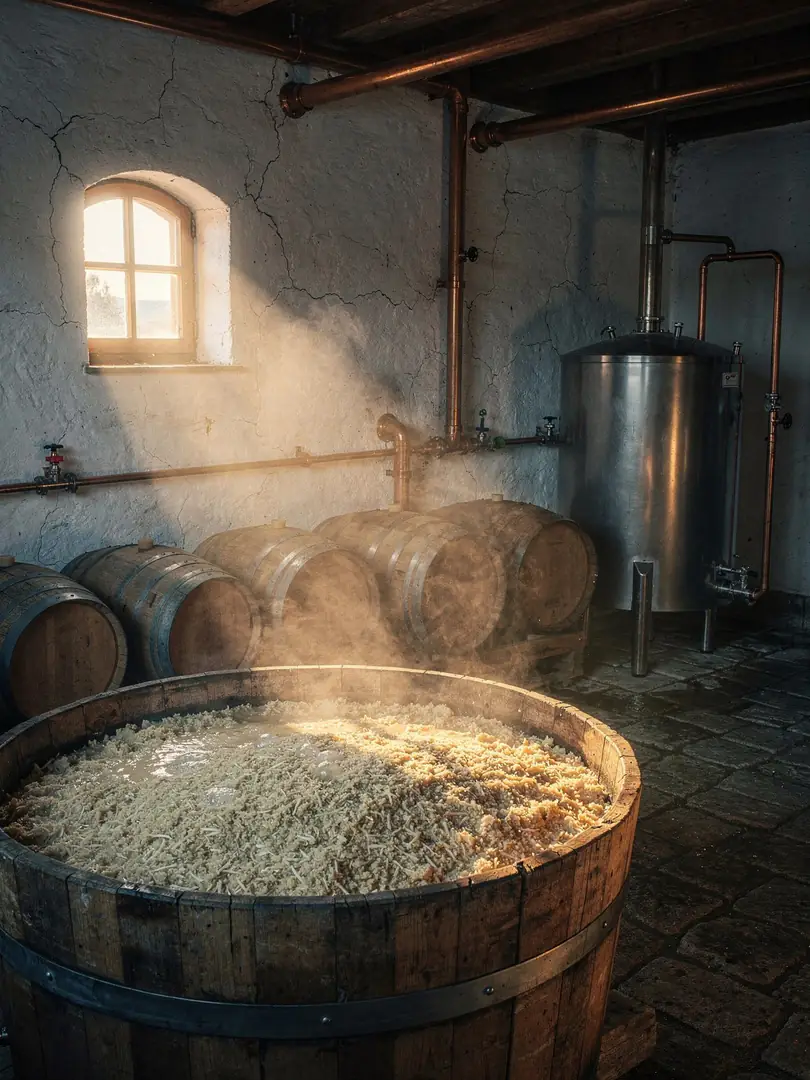
Root Mash in the Vat
Mash & Fermentation
The dug root first becomes mash before anything goes into the still. This means a pulp of crushed roots and water in which fermentation takes place. That a root can ferment may come as a surprise, but gentian stores sugar, and the yeasts convert it into alcohol just as they do with pears or cherries.
Beforehand, the roots are washed, cleaned of soil, and crushed. The finer the material, the better water and yeast can access the sugar. How much water a house adds and which yeast it uses is part of the distiller's craft, and it's what distinguishes the Gebirgsenzian of Berchtesgaden from the gentian brandies of other valleys.
Fermentation with roots often takes several weeks. During this time, alongside the alcohol, the aromas develop that later linger on the palate with earthy, bitter notes. The bitter compounds in the root, above all gentiopicrin, are the reason gentian was once prized as a digestive bitter.
What matters is that fermentation takes place. This is what distinguishes Enzian from a geist, where unfermented fruit is macerated in neutral alcohol, and from herbal spirits, which merely extract roots in alcohol. The regulation permits the addition of ethyl alcohol to Enzian, but prohibits added flavoring.
For the region's Obstler, the mashing process is the same as for any fruit brandy. Apples and pears are ground or pressed into must and left to ferment, usually in stainless steel tanks or wooden barrels. This has little in common with gentian, but both end up in the same still.