Base Wine and Fermentation
Mash & Fermentation
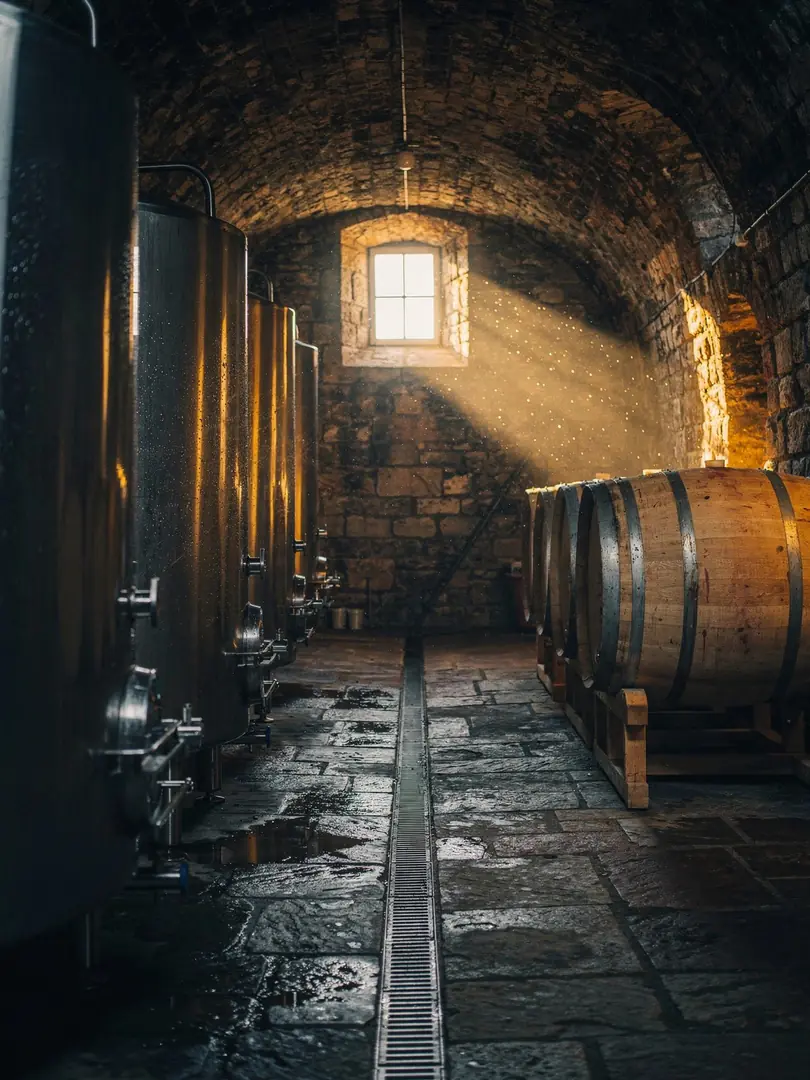
There is no mash in the sense used by fruit distillers when it comes to Weinbrand. The grapes are pressed, the juice ferments into wine, and only this wine later goes into the pot still or column. Skins, seeds, and pulp are removed beforehand, unlike in the fermentation vessel of a cherry distillery.
The yeasts convert the sugar in the grape juice into alcohol. With fruit, the whole crushed fruit ferments; with Weinbrand, only the juice of white grapes does. The result is called base wine and isn't meant for sipping from a glass.
Everything that follows rests on this base wine. It should be cleanly fermented and free of off-flavors, because distillation intensifies whatever is already in the wine. A wine with pronounced acidity and moderate strength is considered a good starting point, since both acidity and aromatic compounds carry through during distillation.
One difference from fruit brandy lies in methanol. This substance forms from the pectin in fruit cell walls, which is why fruit brandies naturally contain more of it. Under EU law, Weinbrand may contain no more than 200 grams per hectoliter of pure alcohol, while a fruit brandy may contain between 1,000 and 1,350, depending on the fruit. Methanol is toxic, which is why these limits exist; the real danger, though, lies in adulterated alcohol, not in a bottle from the shop.
For Cognac, the timeline is fixed. Distillation must be completed by March 31 following the harvest at the latest, so the wine rests for only a few months. In Rüdesheim am Rhein, where Hugo Asbach founded his company, no such deadline applies; it belongs to the rules governing Cognac specifically.