Pot and Run
Distillation
Distilling wine into brandy follows two paths in the Pfalz. Some of the wine is distilled according to the Pfälzer Weinbrand specification through traditional double distillation in copper pot stills. Another portion goes through single distillation in small licensed farm distilleries. Column stills, per the specification, are used only occasionally.
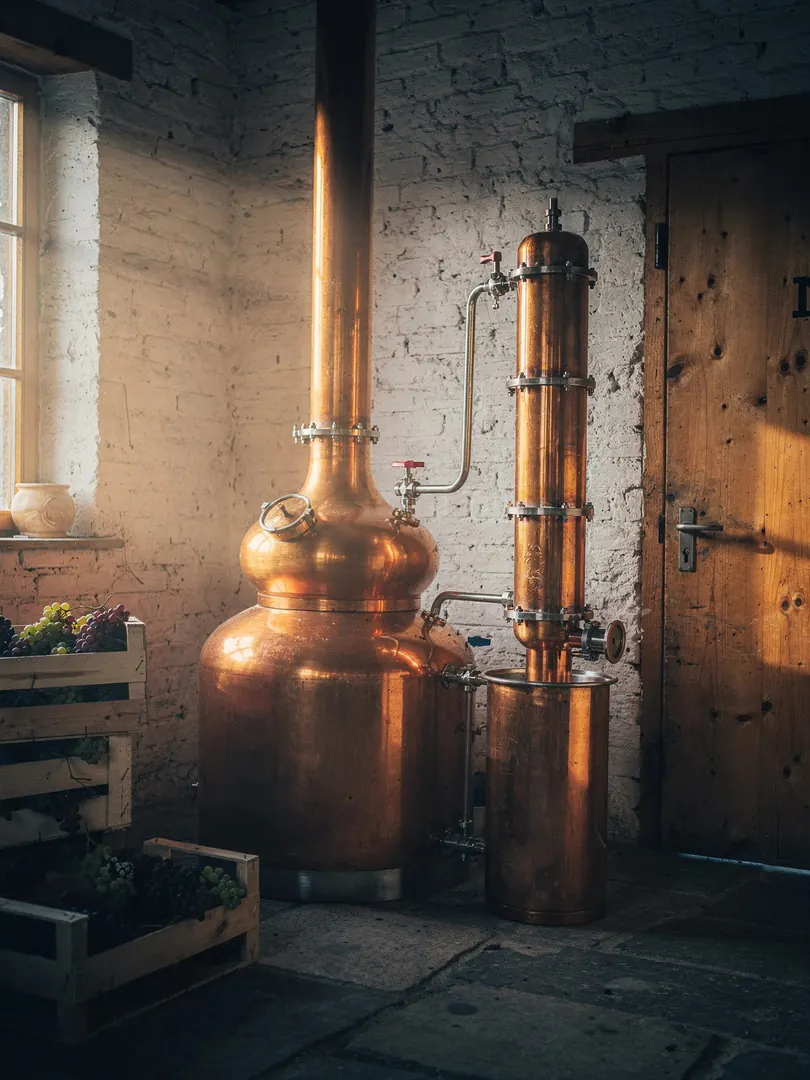
In a pot still, the wine is heated and the alcohol rises as vapor, since it evaporates before the water does. In the condenser, the vapor turns back into liquid. The first run yields a thin intermediate product, and the second turns it into the actual brandy. For Pfälzer Weinbrand, distillation must occur below 86 percent alcohol so that much of the wine's aroma stays in the distillate.
The distiller splits the distillate into three parts. The heads, which come first, smell sharp and contain volatile, undesirable compounds. The hearts become the brandy. The tails, carrying heavy, oily compounds, are cut away again. Where exactly that cut is made shapes the character of the spirit, and it's a matter of experience.
A special rule applies to pomace brandy. It requires that the very first distillation take place with the solid matter present, not with the juice alone. The still can work with steam or with added water. This way, the aromas from the skins and seeds are carried through.
What's described here may only be carried out in Germany with an official license and in approved facilities. Distilling privately is a criminal offense, and even small home stills don't change that. The German Wine Route connects wine estates where such licensed farm distilleries operate, each one registered and approved.