At Least Twelve Months
Maturation & Aging
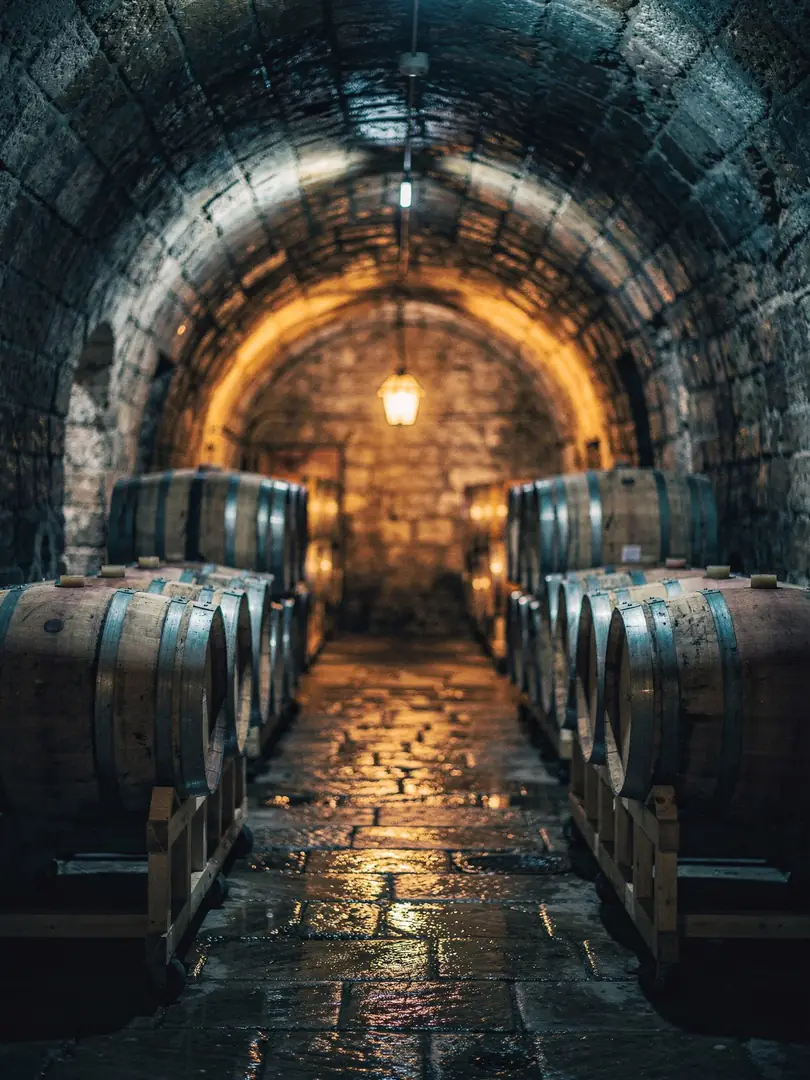
Freshly distilled, brandy is clear and raw. It's the wood that turns it into what eventually lands in the glass. According to its specification, Pfälzer Weinbrand must mature for at least twelve months in oak casks of under 1,000 liters; larger casks aren't permitted.
That's stricter than the EU minimum. The regulation generally requires brandy to age for a year in oak vessels of 1,000 liters or more, or six months in smaller casks. The smaller the cask, the more wood surface touches the brandy relative to volume, and the faster the staves release color and aroma. For brands like Chantré and Mariacron, which carry no protected designation of origin, only the EU rule applies.
For Pfälzer Weinbrand, color comes from the cask alone. The specification rules out caramel coloring, which is otherwise permitted for adjusting brandy's hue. The result ranges from golden yellow to golden brown, depending on the cask. Before bottling, the matured brandy is brought down to drinking strength with water and rounded off with sugar syrup and a plum extract from wine distillate, up to a maximum of 20 grams of sugar per liter. The EU allows up to 35 for brandy in general.
The bottle must also carry an official inspection number, a requirement under the Pfälzer Weinbrand specification just as it is for Deutscher Weinbrand.
Under EU law, any age statement on the label may refer only to the youngest component in the blend. So anyone blending a young brandy with older casks cannot claim the age of the oldest cask.
Pomace brandy, by contrast, needs no wood aging. Many winegrowers let it rest in stainless steel or glass until the sharpness of the first weeks fades and it mellows out.