Three Defining Styles
Brandy Style
Three brandies give this region its character, and once you know the rules, they're easy to tell apart. The first is Pfälzer Weinbrand, the second is the winegrowers' pomace brandy, and the third is the mild-style brandy that Chantré made famous in 1952.
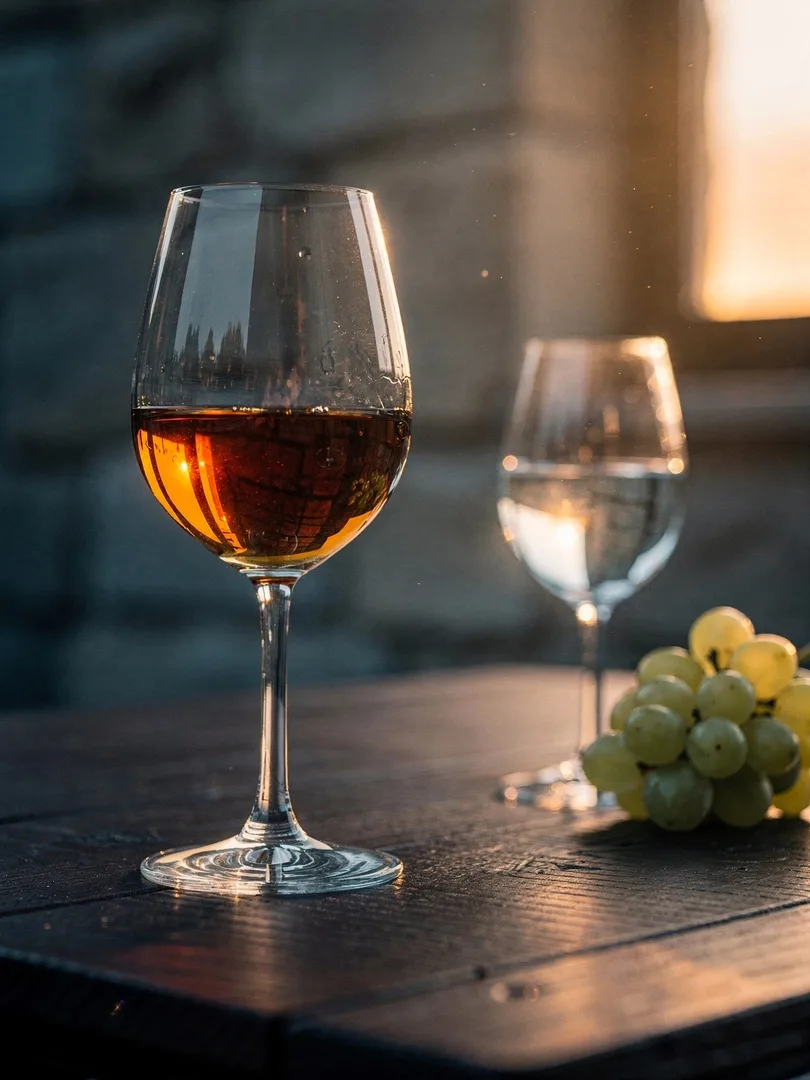
Pfälzer Weinbrand is a name that comes with a strict rulebook. It has at least 38 percent alcohol, is made from Pfalz wine, matures for at least twelve months in small oak casks, and contains no caramel coloring. According to the specification, it smells and tastes mild and smooth, carrying the region's fruitiness alongside notes from the wood. Its color ranges from golden yellow to golden brown.
Deutscher Weinbrand carries the name of the whole country, while Pfälzer Weinbrand is more narrowly defined, since the wine, the distilling, and the origin all come together in a single landscape. At 38 percent, it also exceeds the EU minimum of 36 percent.
The winegrowers' pomace brandy carries no protected name. It's made from fermented grape pomace and has a minimum of 37.5 percent alcohol. In flavor, it's cleaner, more angular and spicier, smelling of grape skin and seeds rather than wood. The difference from brandy resembles that between grappa and Cognac.
The mild brandy that won Eckes over Germany during the economic miracle is softer and rounder. It follows the EU rules for brandy, maturing for at least six months to a year in oak depending on cask size, and is rounded off before bottling. The EU permits up to 35 grams of sugar per liter for this style.
Pfälzer WeinbrandWine and grape brandy · Pfalz white wine, including Müller-Thurgau
- Alcohol
- 38–40 % vol
- Maturity
- 1–3 Years
Golden yellow to golden brown, mild and fruity, with oak notes and no caramel coloring.