Barrel, Yeast, Patience
Mash & Fermentation
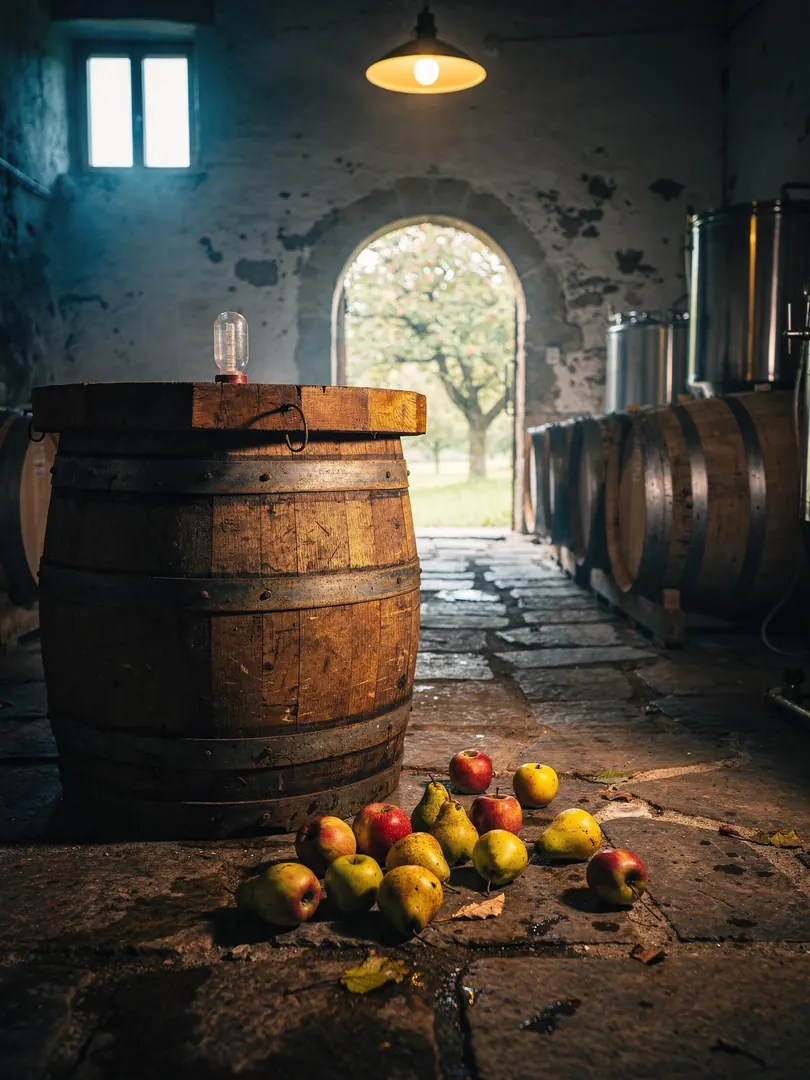
Fruit must first become alcohol before a distiller can make anything of it. For this, apples and pears are crushed into a thick pulp, the mash. It goes into a barrel or fermentation vessel sealed off from air, so the mash doesn't turn to vinegar. An airlock lets the carbon dioxide produced escape while keeping oxygen out.
Yeasts gradually convert the fruit sugar into alcohol. In most cases, the yeasts naturally present on the skin are enough; some producers add cultured yeast. How long this takes depends on the fruit, the temperature, and the sugar content, but it's usually a matter of several weeks. At that point the mash still contains no drinking-strength alcohol, only a few percent by volume, but it's ready for the still.
For Obstler, at least 85 percent of the mash must come from apples and pears, and different varieties may be blended together. The remaining 15 percent can be other fruits or berries. It's precisely this freedom that makes Obstler the farmhouse brandy: whatever was in the crates gets distilled.
Methanol forms in the mash itself from the pectin in the fruit's cell walls. This has nothing to do with poor distilling practice; it's simply inherent to the fruit. That's why EU limits exist: 1,200 grams per hectolitre of pure alcohol for apples and pears, and 1,350 for Williams pears. Mashing clean fruit reduces the risk of off-flavours, but it doesn't change the pectin content.
This is where the raw material owner's own share of the work ends. He has no still and isn't permitted to operate one, so the mash is his contribution: his own fruit, cleanly mashed and fermented. Everything from here on is handled by the allowance distillery where he has it distilled.