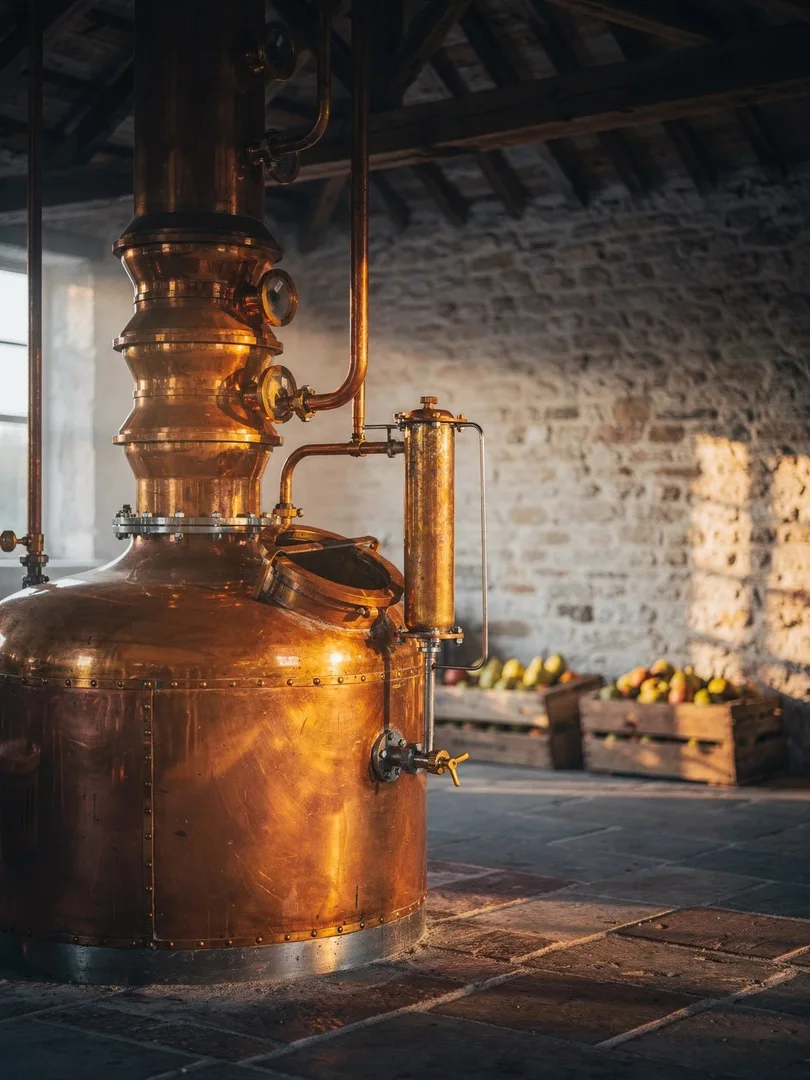
Column, Not Pot
Distillation
In the Domfrontais, there's no choice: the cidre passes through a column still. This is a tall copper column with multiple plates, into which the cidre flows continuously while hot steam rises from below. Alcohol and aromatic compounds concentrate on each plate, and in a single pass, a distillate emerges at the top that's already at spirit strength.
Calvados Pays d'Auge, by contrast, relies on double distillation in the pot still, while standard Calvados allows either method. Column-distilled spirits are generally seen as more linear and fruit-forward, pot-distilled ones as rounder and more full-bodied. This is a tendency, not a rule, since aging and the distiller's hand also shape the spirit.
The specifications set clear limits: the distillate may not exceed 72 percent alcohol, and rectification — refining down to neutral spirit — is forbidden. This preserves the aromatic character that pear and apple bring.
As with any fruit brandy, a distinction is made here too between heads, heart, and tails. The heads come first, volatile and sharp. At the end come the tails, with heavy, often musty notes, and in between lies the heart, which goes into the barrels. Cutting removes unwanted compounds, though it only partly removes the methanol.
This can't be recreated at home: distilling without a license is illegal in Germany. In the Domfrontais, Lemorton and Drouin's Lauriston distillery work with column stills, as required by the specifications for this designation. A related technique is found in Armagnac in southwestern France, which is usually distilled continuously in a column.