Juice, Not Mash
Mash & Fermentation
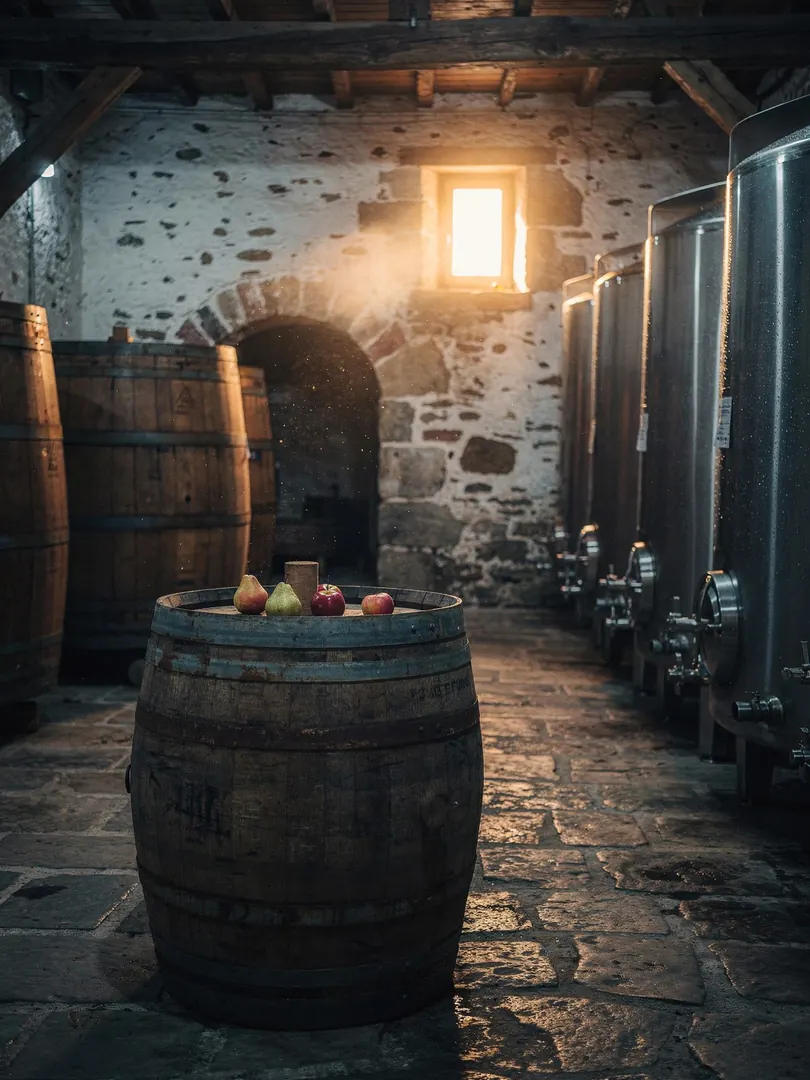
The term "mash" only half applies in the Domfrontais, since Calvados isn't distilled from crushed fruit but from finished cidre and poiré. Apples and pears are crushed and pressed, and only the juice is fermented. The distiller thus receives a drink that could just as well be enjoyed as cidre or poiré on its own.
Legally, the spirit falls under Category 10 of the EU Spirit Drinks Regulation: spirit drink distilled from cider, perry, or both, with no added alcohol and no added flavoring. The cidre must have at least 4.5 percent alcohol at the time of distillation. By then it has little in common with fresh apple juice.
Pear juice ferments differently from apple juice. It contains sorbitol, a sugar alcohol that yeast cannot metabolize. That's why every poiré retains a natural residual sweetness, even once the rest of the sugar has fully fermented. Poiré Domfront, bottled and sold as a drink, draws on exactly this sweetness. In the distillate, it no longer appears, since only alcohol and aromatic compounds carry over.
Fermentation is usually driven by yeasts already present on the fruit and in the cellar. For standard Calvados, the specifications require at least three weeks. The cooler the cellar, the more slowly the yeast works, and, by common experience, the better the delicate fruit aromas are preserved.
Before distillation, the distiller checks the cidre for acidity and off-flavors, since whatever is in the juice ends up in the distillate. Methanol, for instance, forms as pectin in the fruit breaks down, and it's present in every fruit brandy. The EU therefore caps it at a maximum of 1,000 grams per hectoliter of pure alcohol, and a cleanly fermented cidre is the best foundation for a clean spirit.