One Pass, Copper
Distillation
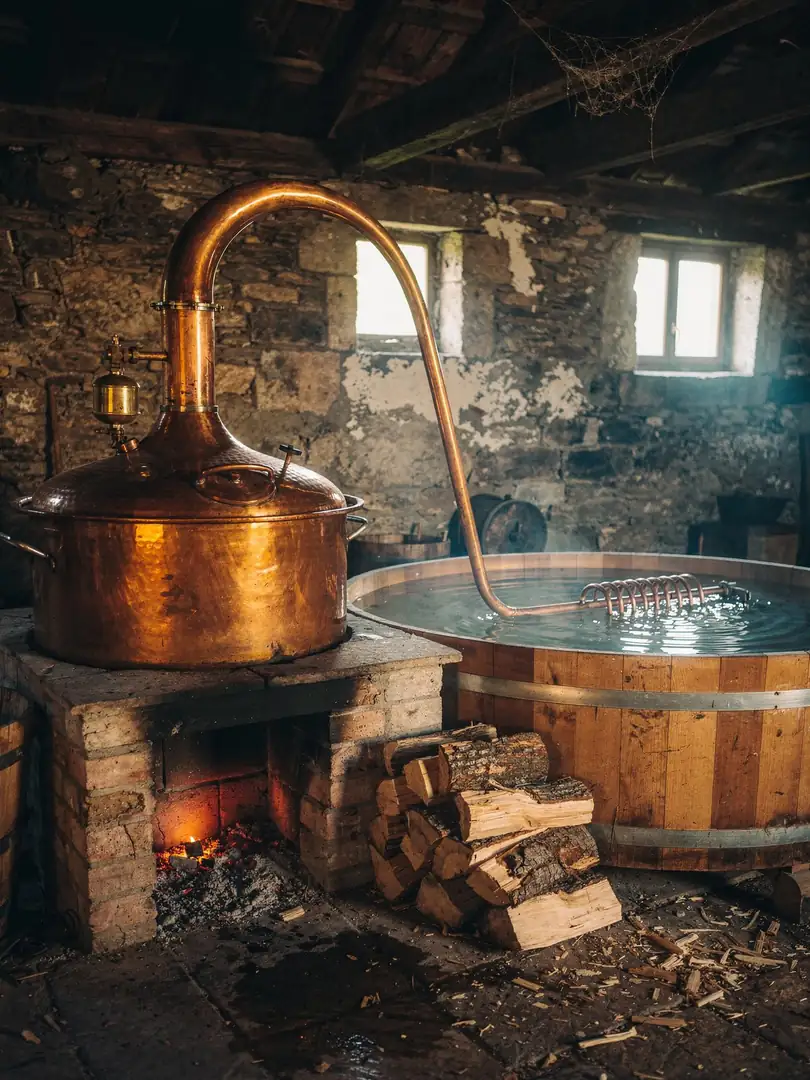
A copper pot still with a swan neck and a coiled tube cooled in water: that's the alambic used for distilling in Fougerolles. The kettle holding the mash sits in a water bath. The vapors rise into the swan neck and condense back to liquid in the coil.
Copper is chosen for two reasons: it conducts heat well, and many unwanted acids and compounds bind to the metal and stay behind in the residue. Fougerolles sticks to a single distillation pass. The distiller then separates the distillate into three parts.
The heads, which come off first at around 70 percent ABV, are discarded. The heart, the middle cut, runs from about 68 down to 50 percent and carries the fruit aroma. The tails, from 50 down to 15 percent, are cloudy and go into the next batch or next year's run.
Not much comes out of the mash: in one example from the inventory map, about 450 liters of mash yield around 60 liters of kirsch, meaning on average 9 kilograms of cherries are needed for one liter at 50 percent ABV. In poor years the harvest can drop from 800 tons to under 150. Filling the still once takes up to four hours. At one Fougerolles distillery, a working day from six in the morning to seven at night saw three successive still charges run through the kettle.
In Alsace, Distillerie Miclo in Lapoutroie distills in classic copper pot stills, giving the distiller precise control over the cut. Kirsch d'Alsace, Kirsch de Fougerolles and Mirabelle de Lorraine must all reach a minimum of 45 percent ABV.
Kirsch d'Alsace and Mirabelle de Lorraine also require a minimum of 300 grams of volatile compounds per hectoliter of pure alcohol, showing that the fruit's aroma has carried through into the brandy. For Mirabelle, the ethyl acetate content may not exceed 500 grams.