Distilling Wine, Not Mash
Mash & Fermentation
Anyone coming from fruit brandies will search in vain for mash here. With Armagnac, there are no fruits with pits and no maceration in a barrel. The grape juice is fermented into wine immediately after pressing—a dry, lean white wine that winegrowers call distilling wine. It's not made for drinking, but for further processing.
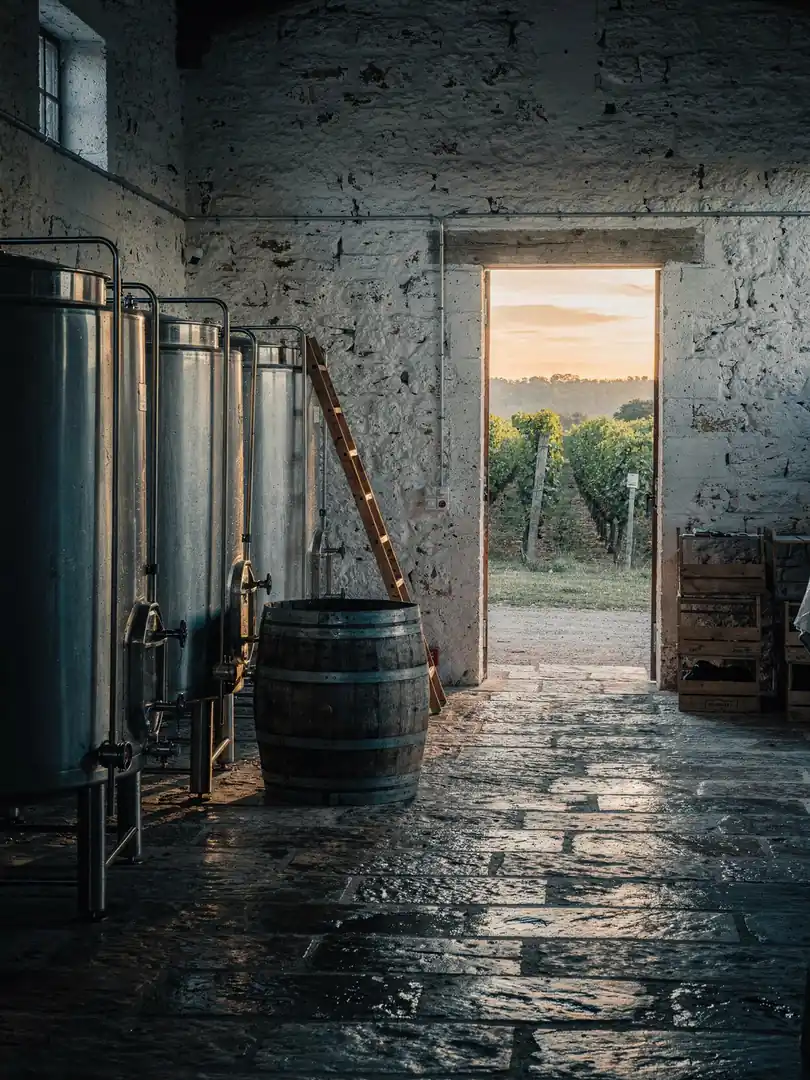
Fermentation takes place in stainless steel or concrete tanks, packed tightly together in the wineries of the Ténarèze. Yeasts, whether already present on the skins or added, convert the sugar into alcohol; after a few weeks the wine has fully fermented and smells of apple and citrus. The result is low in alcohol and high in acidity.
Unlike table wine, distilling wine remains unsulfured. The specifications permit only the small amounts that arise naturally during fermentation. Without sulfur, the wine doesn't keep long, so the distilling season follows immediately after fermentation and continues through the winter.
Legally, Armagnac is therefore a wine spirit. The EU classifies it under the brandy category, which permits only wine or wine-based distillates as raw material; added sugar in the spirit is limited, and foreign alcohol is prohibited. The difference from fruit brandy, which comes from fermented fruit, thus begins at this very first stage.
Many small winegrowers don't distill their own wine but deliver it to a cooperative instead. According to 2012 figures, roughly 70 percent of Armagnac volume comes from winegrowers and cooperatives. Anyone visiting a farm in the Gers around Condom will therefore often see tanks, but no still.