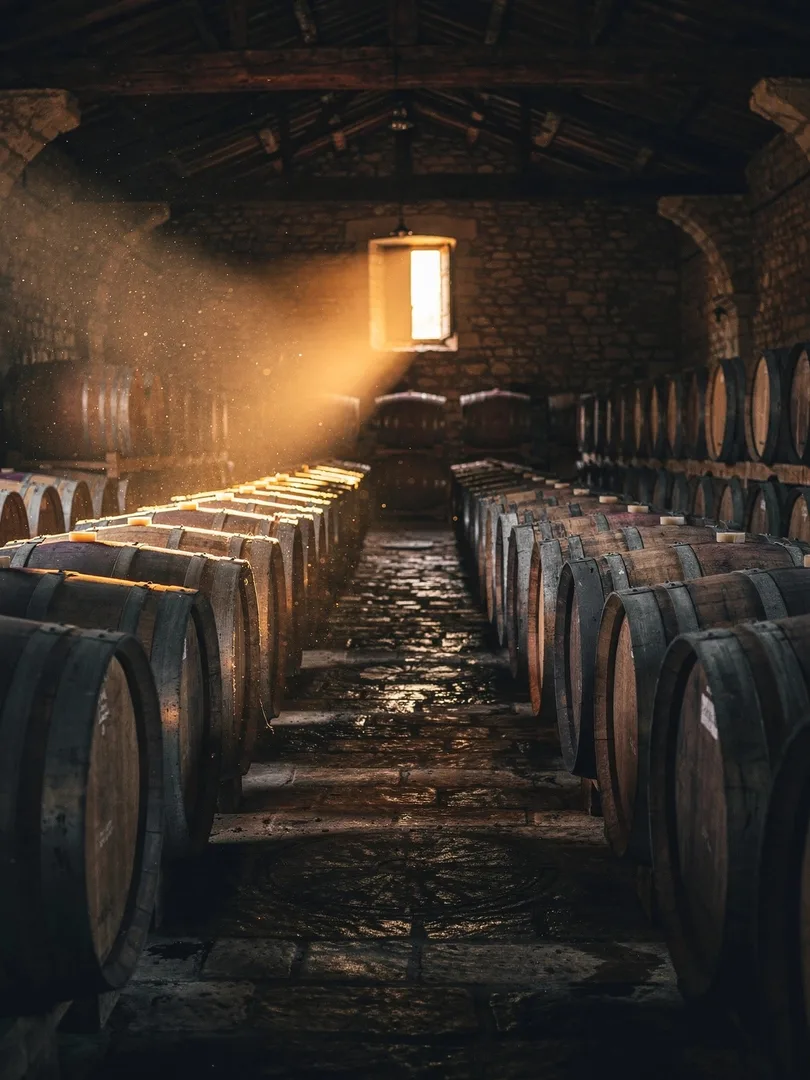
Oak and Patience
Aging & Maturation
How long must Armagnac age? At least one year in oak, counted from April 1 after the barrel is filled. After that, it may be bottled, and for sale it must reach at least 40% ABV. Anything beyond that is a matter of house style, not law.
Traditionally, Armagnac ages in 400-liter barrels made of black oak from the forest of Monlezun in Gascony. This wood is dense and tannin-rich, imparting spice notes, but has become scarce. Today, oak from Limousin and Tronçais is more commonly used.
An experienced cellar master first fills the fresh spirit into new barrels so it quickly absorbs color and structure. After a few months, he transfers it into older barrels that release little tannin. This prevents the brandy from becoming too woody. The Ténarèze needs these steps especially, as its spirit is considered the boldest of the three and matures later.
Age statements on the label always refer to the youngest component. Since 2018, an XO must be at least ten years old, just as with Cognac. Delord also bottles vintages, such as a 1979 Ténarèze. In that case, the year on the label is the harvest year, not the bottling year.
Blanche Armagnac breaks with all of this. After distillation it rests for at least three months in an inert vessel, usually stainless steel, which imparts nothing, and remains colorless. Because it was never in wood, it tastes of grape and of the wine it came from, not of the barrel.