Bold, Taut, Clear
Style
Armagnac-Ténarèze is the name given to a brandy from the central part of the region, distilled from wine grown on limestone-rich clay. It's considered the boldest of the three Armagnacs: plenty of spice, prune, dark spice notes, and a long finish. It needs time, and older bottlings in particular reveal what it's truly capable of.
Haut-Armagnac lies in the east around Auch. Here the vines grow on cold limestone, and the brandies are considered tauter, with more acidity and less richness. Since, according to industry figures, only a small share of total output comes from here, the name appears less often on shelves than Ténarèze, even though it's a permitted designation of origin.
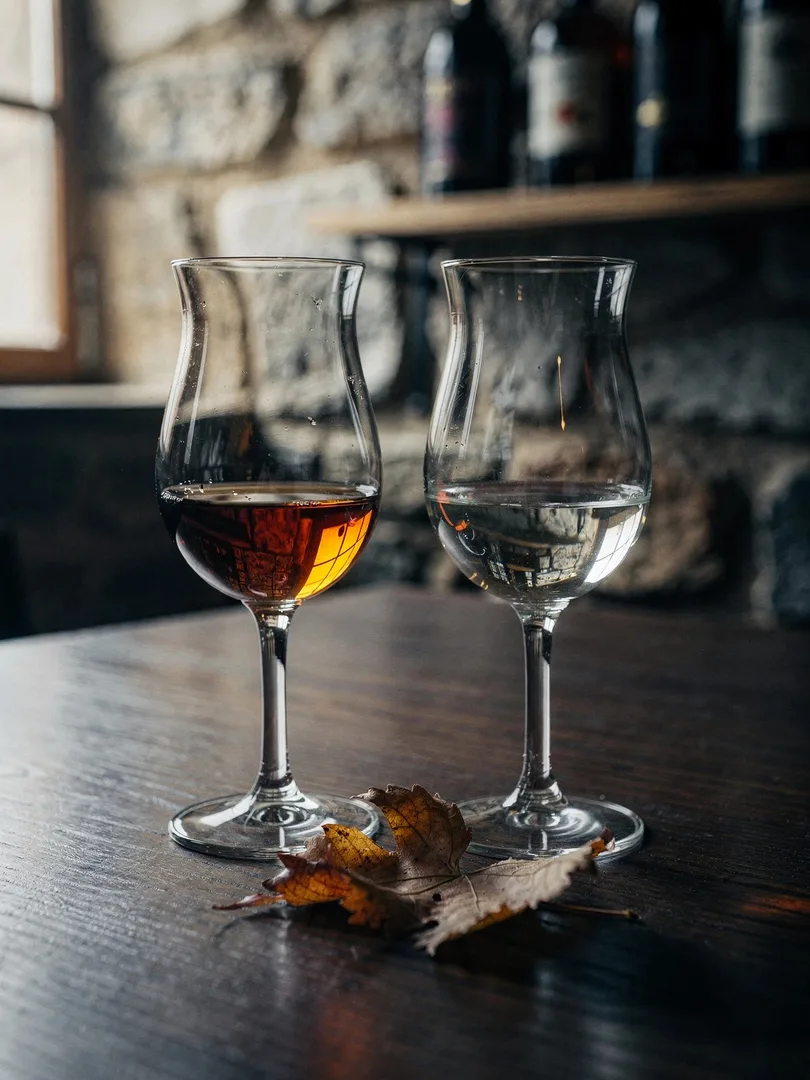
What is Blanche Armagnac? It's an Armagnac that doesn't go into a barrel after distillation. It rests for at least three months in an inert vessel, stays colorless, and may not be artificially colored. In France it has been part of the appellation since 2005, and it's not a separate EU entry but a designation within the AOC Armagnac.
How does the taste differ from its neighbor? Bas-Armagnac in the west, grown on sandy soil, is considered finer and fruitier. The Ténarèze focuses on power and length. Between Blanche and Cognac lies another contrast: Cognac is always aged in wood, while Blanche never is. Smelling both side by side reveals just how differently the same grape can express itself.
Even within the Ténarèze, houses differ. Janneau in Condom, by its own account, favors spirits from both column and pot stills, while Delord in Lannepax bottles vintages and a Blanche alongside its age-graded releases. Both are ways of showcasing the region's power: one through blending, the other through single vintages and clarity.
Armagnac-TénarèzeWine and grape brandy · White wine, mainly Ugni Blanc
- Alcohol
- 40–46 % vol
- Maturity
- 1–20 Years
Bold and spicy, prune and dark spice notes, needs years to round out.