Pomace from Crete
Fruit & Raw Material
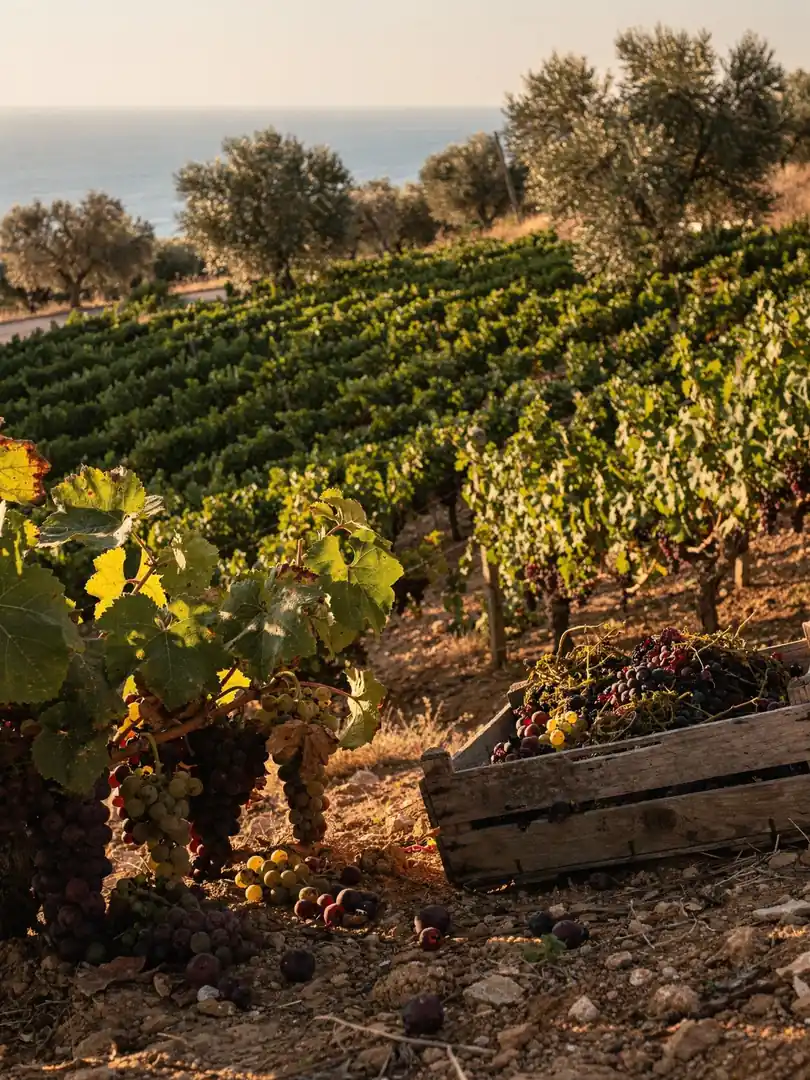
What is Tsikoudia distilled from? Grape pomace, that is, what's left in the press after pressing: skins, seeds, and stems, called Strafylla in Greek. They come from the island's vines, from Chania in the west to Lassithi in the east.
Crete is a wine island with its own varieties. Vilana dominates among the whites, while Kotsifali, Liatiko, and Mandilari are the main reds. Well-known wine regions lie around Peza and Archanes south of Heraklion, and the Messara plain in the south is part of this too. Which varieties end up in the pomace depends on the vineyard and the cellar it comes from.
The technical file explicitly ties the aroma of Tsikoudia to the grape varieties used. So a brandy made from red Liatiko pomace can smell quite different from one made from Vilana, without either being any less authentic.
The difference between red and white also leaves its mark. Red pomace has usually already fermented along with the wine and is therefore spent. White pomace, by contrast, comes out of the press unfermented and still contains plenty of sugar, which the yeasts later convert into alcohol.
The fact that a brandy comes from leftovers is no drawback. A large share of a grape's aromatic compounds sits in the skins, and these are exactly what transfer into the distillate during distillation. Harvest on Crete begins early, in late summer, and afterward the pomace can't wait long: left exposed, it molds or turns sour, so it's quickly moved into sealed containers.