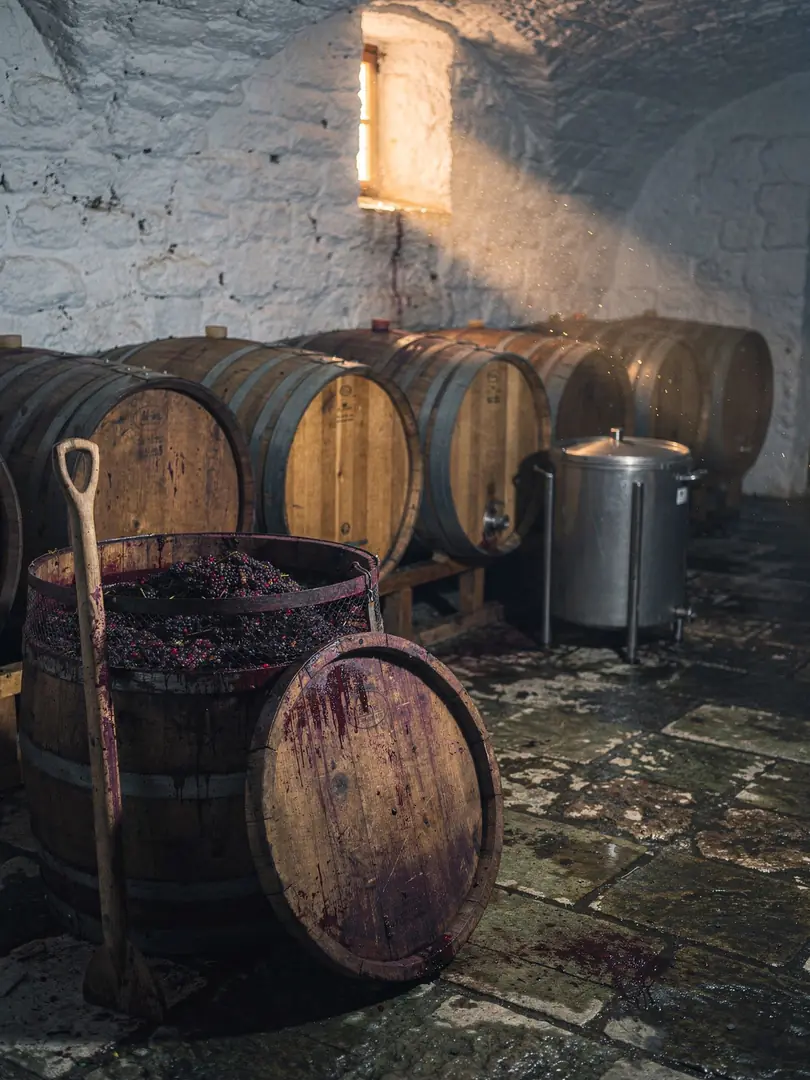
Fermentation in the Barrel
Mash & Fermentation
Fermentation determines whether it's Tsikoudia or acetic acid that ends up in the still. The pomace is therefore packed firmly into barrels and sealed airtight, so the yeasts can work undisturbed and no air invites in acetic bacteria.
It stays there for four to six weeks, according to Cretan sources, sometimes longer. During this time, the yeasts convert the residual sugar in the skins and the clinging juice into alcohol. The pomace itself stays solid; no flowing mash forms, unlike with cherries or plums.
Under EU law, pomace for a pomace brandy must be fermented before it can go into the still. With Kotsifali or Liatiko, whose pomace has already fermented along with the red wine, this secondary fermentation is short; with Vilana and other white varieties it takes longer, since more sugar remains.
Cleanliness matters. A barrel that smells of vinegar or mold after fermentation won't yield a brandy worth showing off, since such off-notes carry through into distillation. Many families therefore leave the fermented pomace undisturbed until distilling begins.
When autumn days grow shorter and temperatures drop, the pomace is ready. For the villages, this marks the beginning of the season when Raki is made, not just bought off a shelf. Fermentation stays in the background; the real celebration happens at the Kazani.
Exactly how long the pomace rests is decided by each distiller based on experience and weather. In a warm autumn, fermentation moves quickly; on cool nights, it takes longer. Experienced distillers, it's said, recognize the right moment by smell: once the sweetness is gone and a clear, lightly fruity scent of alcohol rises, the pomace is ready.