Mostly Unaged
Maturation & Storage
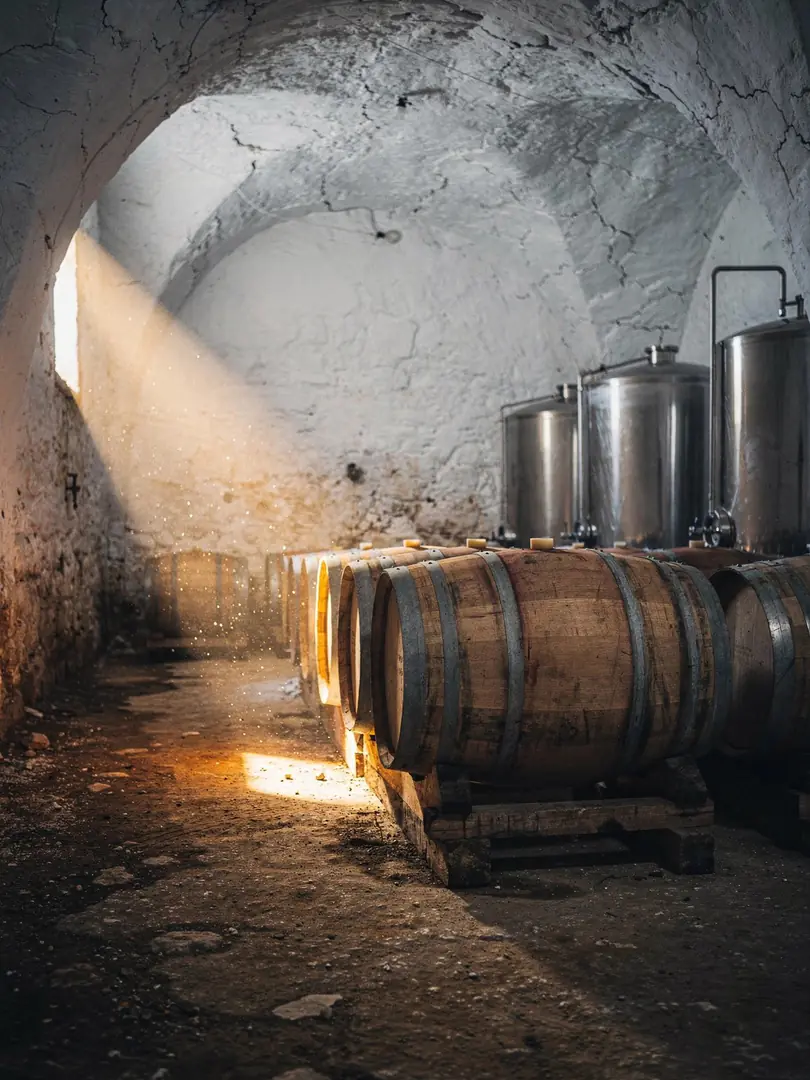
How long is Tsipouro aged? Mostly, barely at all. The classic bottlings are unaged, clear spirits that rest for some time in stainless steel, glass, or other neutral vessels after distillation until the aromas settle. The EU prescribes no maturation period for pomace brandy.
Some houses offer aged versions that take on color and spice in oak casks. Here an EU rule applies: an age statement may only cite what corresponds to the youngest component in the bottle. A reference to ten years therefore means that everything in the glass is at least that old.
Metaxa is a completely different matter. Is Metaxa a brandy? Under current EU law, no. Spyros Metaxa founded his house in Piraeus in 1888, and according to the company, it blends wine distillate with muscat wine and a bouquet of rose petals and Mediterranean herbs. It is aged in oak.
The label once read "Cognac," until 1937, then "Brandy," until 1987. Since then it has read "Original Greek Spirit." Metaxa is a spirit of its own kind and not a subcategory of brandy. The house belonged to Grand Metropolitan from 1989 and has been part of Rémy Cointreau since 2000.
Oak maturation links Metaxa to Cognac and Armagnac, yet the path there is different. Placing Tsipouro and Metaxa side by side reveals two opposite poles: a clear pomace spirit, barely aged, and a brown blend, rounded out in wood. Both belong to Greece, though legally they have little in common.
Between distillation and bottling, the spirit is reduced to drinking strength with water, which is permitted and standard practice for pomace brandy. It may be sweetened up to 20 grams per liter, though the classic bottlings remain dry. Storage is dark and cool, since light and warmth cause the delicate muscat aromas to fade more quickly.