Pomace, Not Wine
Fruit & Raw Material
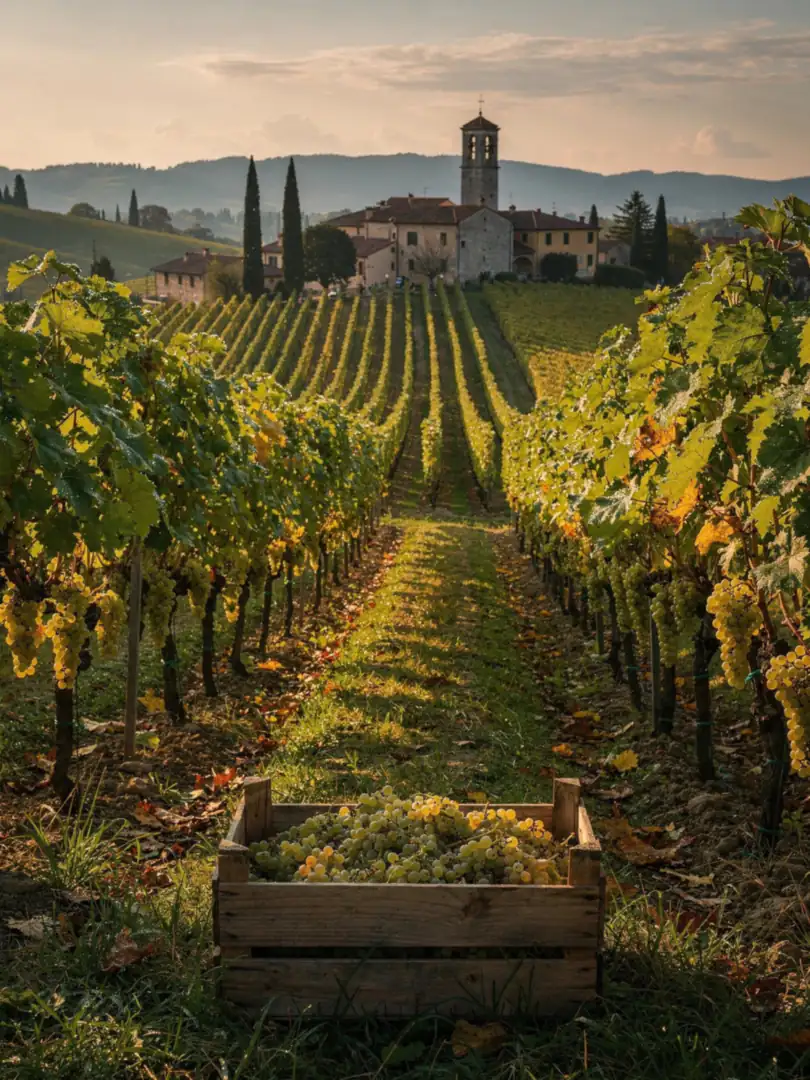
When the harvest in the Veneto comes to an end in autumn, the real season begins for the distillers. Their raw material is called vinaccia in Italian, or pomace in English: the skins, seeds, and often stems left over after the grapes have been pressed. This also answers the question of what Grappa is made from—namely, grape remnants, not wine.
The Veneto offers a wide range for this. The white Glera, from which Prosecco is made, yields pomace with a floral, rather delicate aroma. Garganega, the main grape of Soave, produces softer notes, while Merlot and Cabernet give more robust ones. Around Breganze, not far from Bassano, the white Vespaiolo grape also grows as its own distinct variety.
What matters is when the pomace is produced. Red wine ferments on the skins, so the pomace is already fermented by the time it's pressed. White wine, by contrast, is pressed before fermentation, so its pomace is still sweet and must ferment before it can go into the still. EU law explicitly requires fermented grape pomace for pomace brandy.
Freshness is crucial. If pomace sits out in the open, mold and acetic notes develop that later spoil the glass. Good distilleries therefore have it delivered quickly and store it airtight until the still is free. The pressing pressure also plays a role: the gentler the pressing, the more juice and aroma remain in the skins.
The fact that pomace in particular became the raw material has to do with thrift. According to tradition, farmers and itinerant distillers used what remained after pressing and turned it into brandy. Today, the origin of the pomace also determines whether a Grappa may be called Grappa veneta: the grapes must have grown in the Veneto.