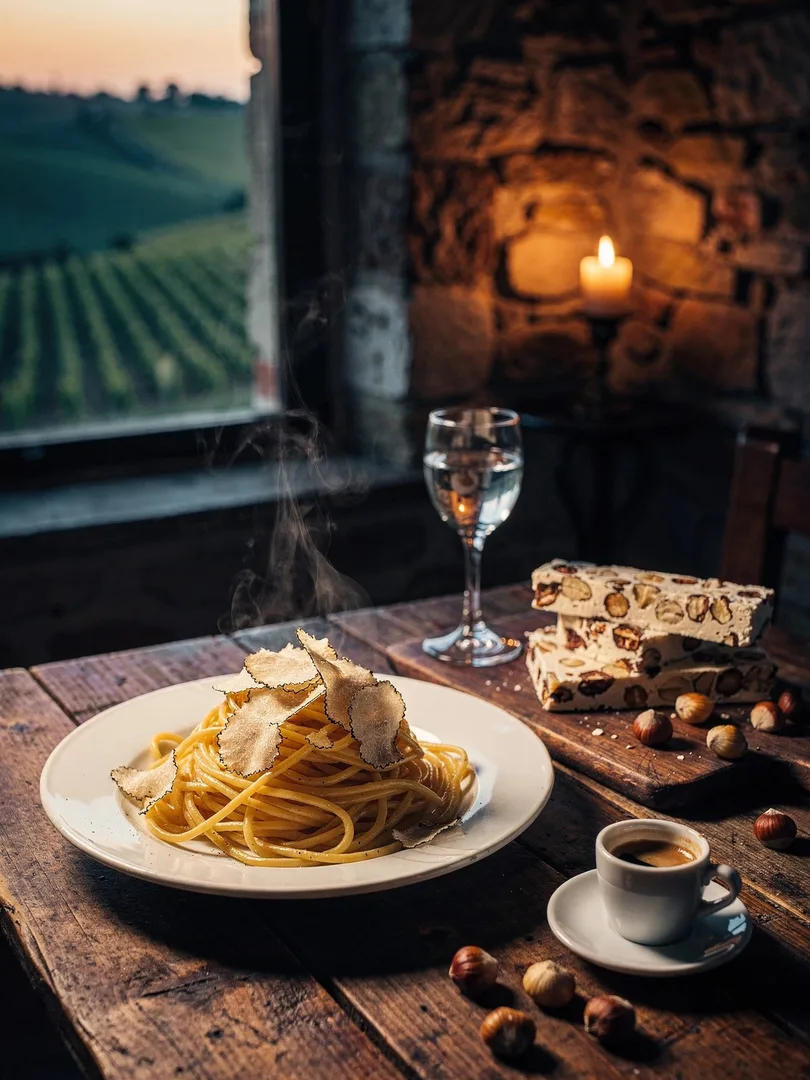
Truffles and hazelnuts
Food & Tradition
In autumn, when white truffles are traded in Alba, Tajarin appear on plates throughout the Langhe: thin egg noodles from the farmhouses of the region, traditionally made for holidays when enough eggs were on hand. Freshly shaved truffle goes on top—the dish needs nothing more.
With the region's braised dish, Brasato al Barolo, grappa appears as a guest at the end of the meal. Beef is marinated in Barolo and braised slowly until it falls apart; what little room remains afterward calls for a small, clear spirit to clear the palate. Strong cheeses make a second pairing, and according to the Grappa Institute this holds especially true for Grappa di Moscato.
The region's second signature flavor is the hazelnut. The Tonda Gentile of the Langhe found its way into chocolate early on: Turin chocolatiers used it to stretch costly cocoa, giving rise to Gianduja. Torrone d'Alba with honey and hazelnuts, and hazelnut cake, belong to this tradition too. Against so much sweetness, dry grappa helps, its spice cutting through fat and sugar without masking them.
In Piedmont, grappa comes at the end, not with the meal. Anyone with a splash in their coffee after espresso is drinking a Caffè corretto, as across Italy. During truffle season, Alba hosts a major truffle fair, and the food around it follows the season. Quantity still matters: a small glass to close the meal, no more.
The cuisine of the Langhe also knows meats and cheeses that can stand up to a spirit: Fassona beef, marinated in red wine for up to a day for the Brasato, and aged hard cheeses served at the edge of the plate with honey or nuts. Grappa then belongs at the end of the table, once the plates are cleared and conversation slows.