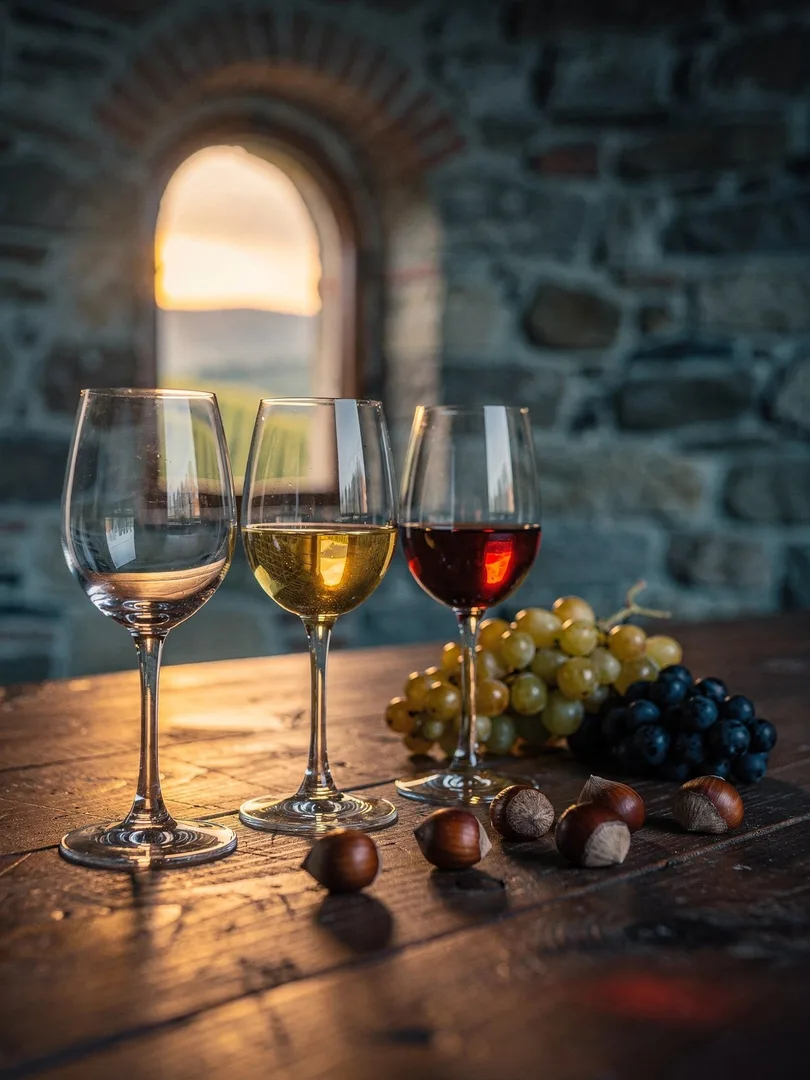
Tulip glass, not a shot glass
Tasting
What does Grappa di Barolo taste like? Unaged, it smells of red berries, rose petals and spice, while on the palate it feels robust and dry, with a slightly bitter note in the finish. Add a year or more in wood, and the spice turns into vanilla, tobacco and dried fruit. Grappa di Moscato, by contrast, is lighter, more floral and almost sweet on the nose, yet dry in the mouth.
A narrow tulip glass or nosing glass suits a comparison well, channeling the aromas toward the opening rather than spreading the alcohol wide. Smelling from a distance first, then inhaling more deeply, keeps the nose from going numb. A drop of water can open up the aromas, though it isn't essential.
Temperature: aged grappa suits room temperature, around 16 to 18°C (61–64°F). White, young spirits can be served slightly cooler, but never so cold that the aroma shuts down. Too cold mutes the nose; too warm lets the alcohol dominate.
When tasting, a small sip held briefly in the mouth before swallowing is enough; the goal is comparison, not consumption. When tasting several spirits in a row, keep a glass of water and a piece of bread nearby, and begin with the palest, lightest spirit. That way the palate stays fresh, and the delicate Moscato grappa isn't overwhelmed by the more powerful Nebbiolo grappa.
Three houses make for a good comparison. Bocchino of Canelli is considered the house of Moscato pomace. Berta of Mombaruzzo, by its own account, produces 35 grappas and six liqueurs, selling half abroad. Marolo of Mussotto d'Alba stands for Nebbiolo, Moscato and Arneis. A three-way tasting shows in minutes just how differently pomace can taste from the north to the south of the Langhe.