Branda and Barolo
Region & History
Grappa piemontese is the name given to the pomace brandy distilled and bottled in Piedmont from the region's approved grape varieties, and it has carried its own protected geographical indication since June 12, 1989. On the same day, Grappa di Barolo was registered, which may only be made from the pomace of Barolo DOCG wine. In dialect, Piedmontese call the spirit "branda." Comparing the two names reveals the difference at once: one may come from any approved variety, the other only from the pomace of a single wine.
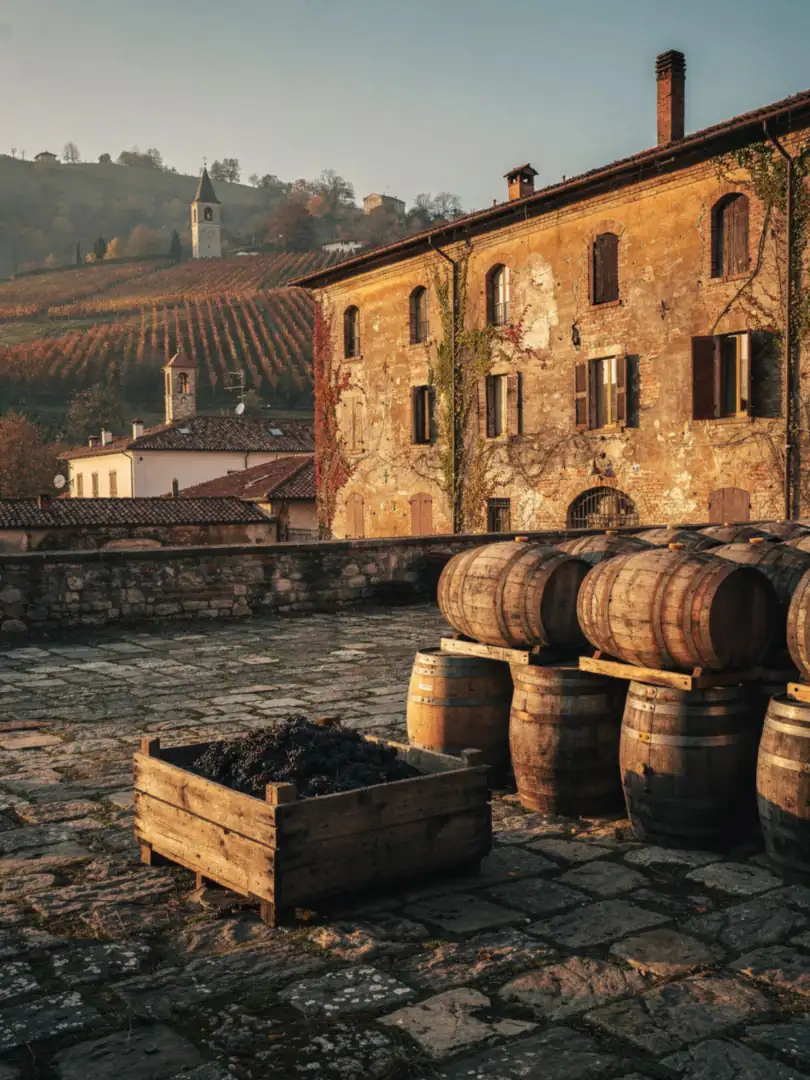
The tradition runs deep. According to the grappa industry, a guild of confectioners and aquavit distillers already existed in Turin in 1739. What was distilled was whatever remained in the press after the grapes were crushed: skins, seeds and stems. Where as much wine grows as in the Langhe, Roero and Monferrato, a great deal of this falls each autumn. These wine landscapes have been UNESCO World Heritage sites since 2014, and in Canelli the underground cellars are included.
Three houses still shape the picture today. Carlo Bocchino returned from Argentina in 1898 and opened a distillery in Canelli; the house is considered one of the first to take Moscato pomace seriously. Paolo Berta began in Nizza Monferrato in 1947; since 2002 the family has worked in Mombaruzzo near Asti, now in its third generation. And in 1977, Paolo Marolo, then a teacher at the oenology school, founded Distilleria Santa Teresa with his brother in the family home in Mussotto d'Alba, named after a fresco of Saint Teresa of Ávila.
To the northwest lies the Aosta Valley. Grappa della Valle d'Aosta has been registered as its own geographical indication since 2018: the grapes grow in the valley and are processed there, with the pomace going into small pot stills.