Nebbiolo and Moscato
Fruit & Raw Material
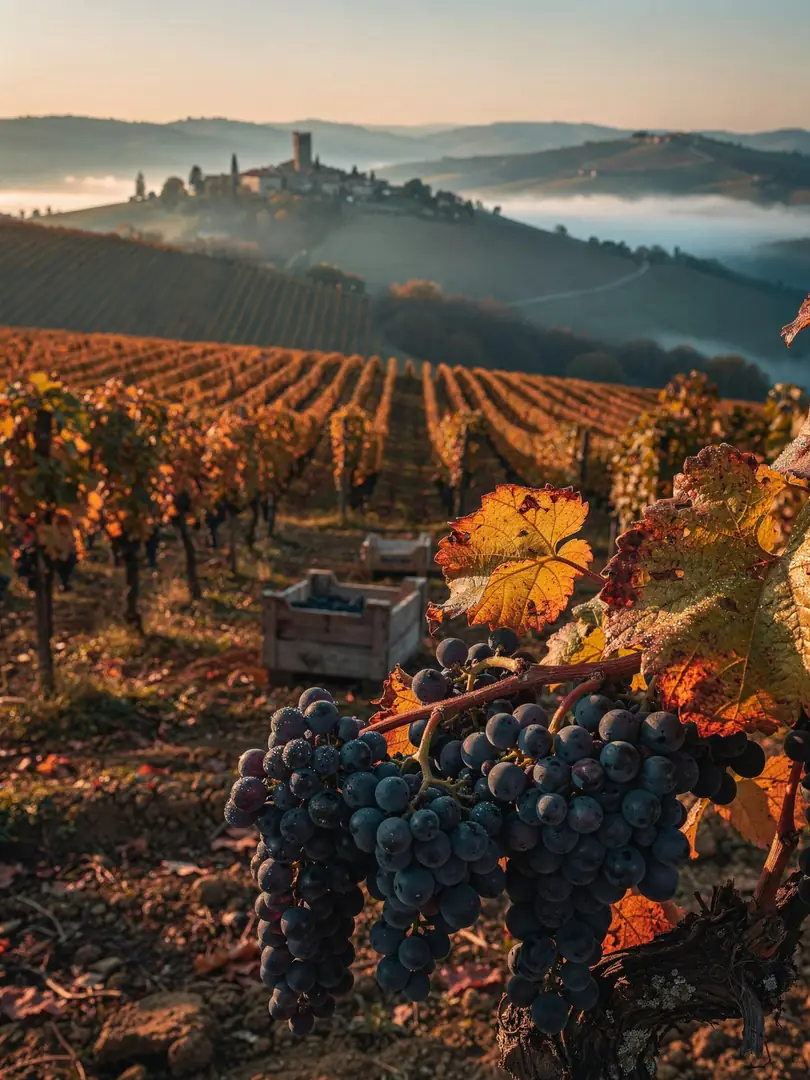
What is Grappa di Barolo made from? Exclusively from the pomace of Barolo DOCG wine—that is, from the skins of Nebbiolo grapes grown on roughly 2,000 hectares in the hills of the Langhe. This pomace is distilled in Piedmont and bottled there too. The vine ripens late, the harvest usually stretches into October, and what then comes out of the press is dark, dense and still moist with must.
Other varieties serve for the simpler Grappa piemontese. The Grappa Institute names Nebbiolo, Dolcetto and Barbera among red grapes, and Moscato Bianco and Erbaluce among whites, as the basis for quality spirits. Marolo also works, by its own account, with the pomace of Arneis, the white wine variety at home in the Roero.
Moscato plays a special role. It is among the most widely planted varieties in the region, and around Canelli and Nizza Monferrato it grows thick between the hills. Its pomace has a strong scent of muscat and blossom, an aroma that survives all the way to the glass. Bocchino has built on this since its founding in 1898.
Freshness is crucial. Pomace is a byproduct that cannot wait: left exposed, it develops mold and a vinegary tang, and that flaw lingers in the spirit for years. Good distillers therefore talk with winegrowers about harvest timing and pressing before the first grape truck even arrives at the farm. The quality of the skins, the industry says, determines the quality of the grappa; there is only limited room to correct matters in the distillery.