Pomace, Pits, Roots
Mash & Fermentation
At the start of Kirsch Trentino and Aprikot trentino lies a mash — a thick pulp of crushed fruit, juice, and pits kept as intact as possible. The pits stay whole because crushed kernels release hydrocyanic acid; the EU allows a maximum of 7 grams per hectoliter of pure alcohol in stone-fruit brandies.
Next comes yeast, a fungus that converts fruit sugar into alcohol. The mash sits sealed airtight in stainless steel tanks or barrels, since oxygen would turn the alcohol to vinegar. Depending on the fruit and temperature, fermentation takes several weeks. During this time, the mash smells distinctly of fruit and alcohol.
Apples for Distillato di mele trentino are also crushed into a mash; it is often lightly acidified to prevent unwanted microbes from taking hold. In Genziana trentina, gentian roots ferment in place of fruit; the regulation describes gentian as a distillate of fermented roots.
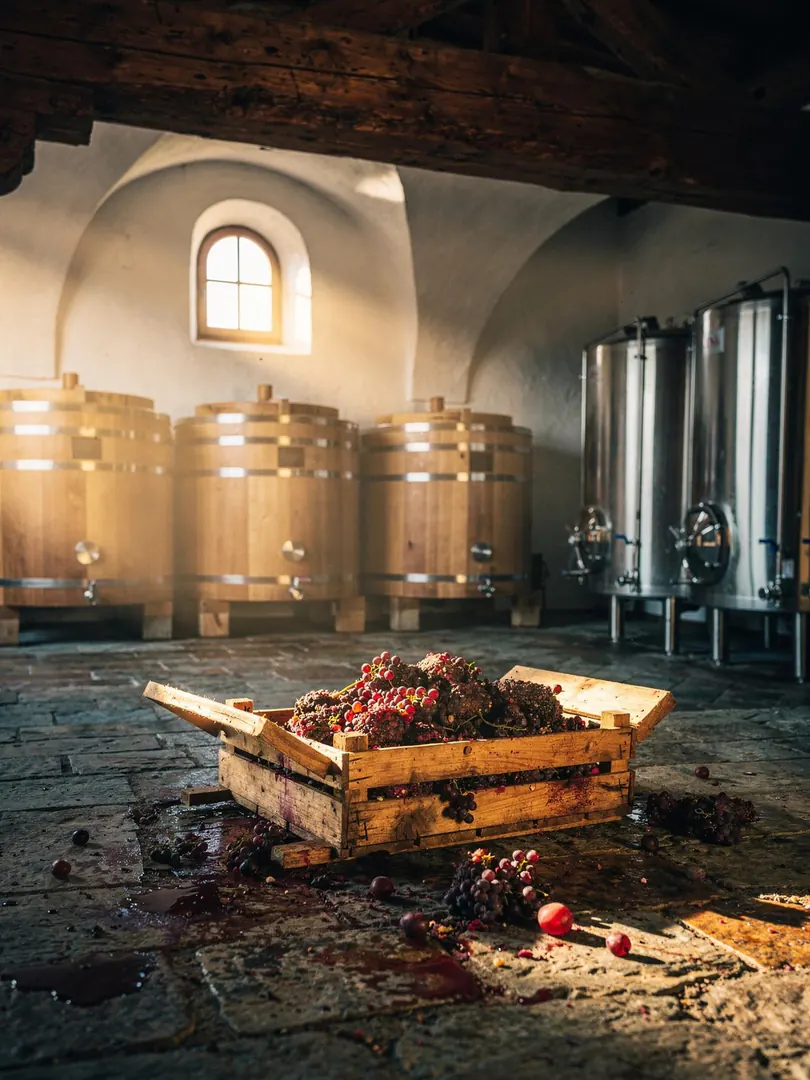
With Grappa, the work begins in the winery, not the distillery. Red varieties like Teroldego ferment along with their skins, so the pomace contains almost no sugar left. White varieties like Nosiola are usually pressed before fermentation; their pomace is still sweet and must ferment further before it can be distilled. The distiller therefore needs to know early on which pomace is sweet and which isn't, since that determines whether it can go straight to the still.
Until distilling, the pomace must be stored clean and as airtight as possible, since mold or a vinegary taint would later show up as off-notes in the glass.
Another reason for careful work: under light, hydrocyanic acid in the finished stone-fruit brandy can form ethyl carbamate, a suspected carcinogen for which Germany's Federal Institute for Risk Assessment cites a guideline value of 0.4 milligrams per liter. That's why the pits are kept intact, and why cherry and apricot brandies are better stored in the dark.