Wine as the Base
Mash & Fermentation
At the start of Armenian brandy stands not a spirit but a dry white wine from the Ararat Plain, fermented in the cellar like any other: the grapes are pressed, the juice ferments until the sugar has turned to alcohol. Unlike fruit brandy, there are no skins or seeds in the vat — as a rule, the clear juice ferments alone.
This base wine isn't meant for drinking. It should have low alcohol, taste clean, and bring enough acidity, because distillation intensifies everything fruity — but also every flaw. A musty or vinegary wine won't yield a good spirit, no matter how long it later rests in the barrel.
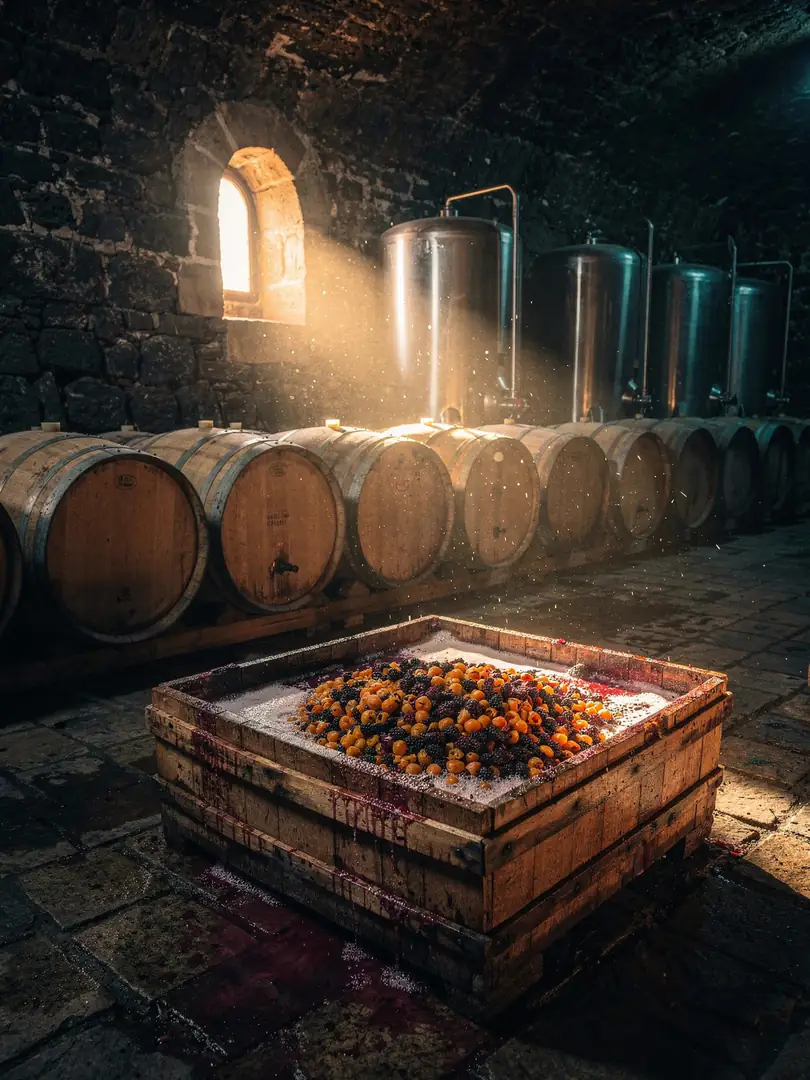
With Oghi, things work differently, since the whole fruit is needed here. Apricots or mulberries are crushed and left to ferment on their own in a vessel. Mulberries bring plenty of sugar, which the yeasts convert into alcohol. With apricots, the distiller decides whether the pits stay in the mash, since they lend a hint of bitter almond to the later spirit, a note many prize in apricot brandy.
On homesteads, the yeasts often come from the fruit itself. Fermentation takes several weeks depending on warmth and ends once the mash stops foaming and the sugar is used up. After that it doesn't keep long, since air and warmth turn it sour, and acetic acid never makes a fine spirit.
The same principle applies to both grapes and fruit: fermentation first, then separating the alcohol from the rest. Whether the starting point is a wine cellar near Yerevan or a homestead corner with apricot trees ultimately shapes the style of the spirit more than any trick at the still.