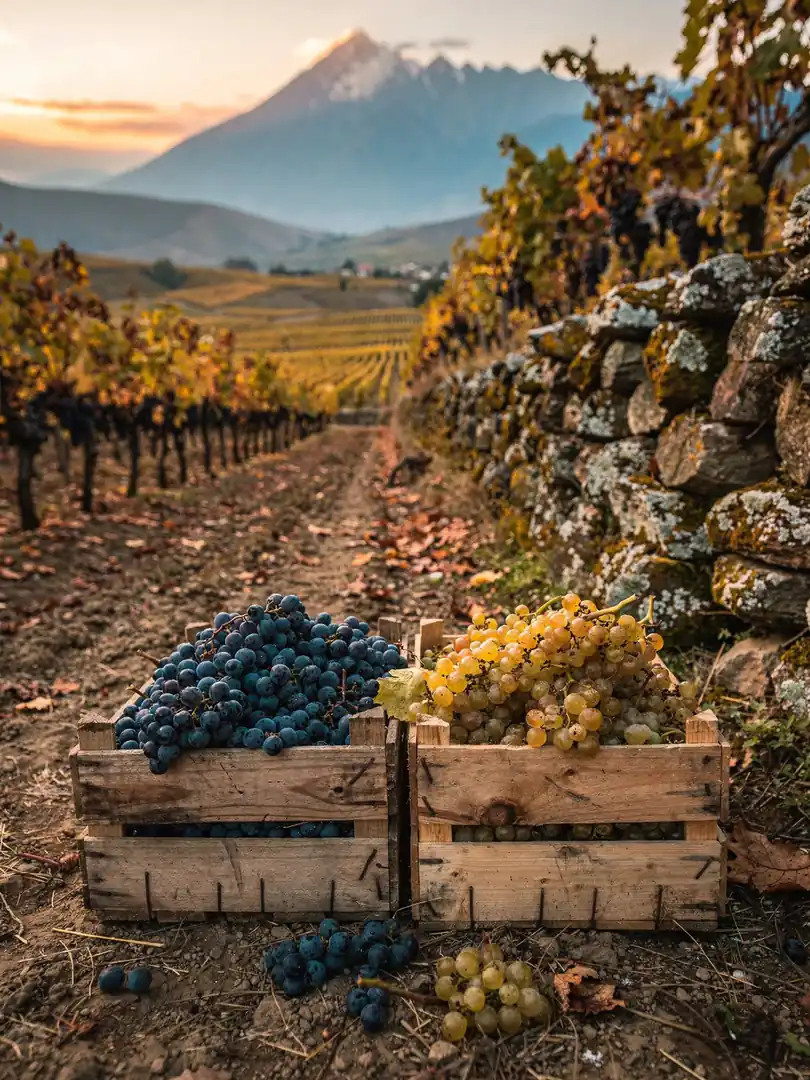
Rkatsiteli and Saperavi
Fruit & Raw Material
Rkatsiteli and Saperavi, Georgia's leading white and red varieties, often supply the skins for Chacha. In Kakheti, the wine country in the east, their vines line the Alazani Valley between the Greater Caucasus and the Gombori Mountains.
But the spirit is not made from the juice—it comes from what remains after pressing or fermentation: skins, seeds, and stems. For wines aged in Qvevri on the skins, the skins often sit in the wine for months, lending color, tannin, and aroma. White wines made this way are called amber or orange wines because of their color.
For the distiller, pomace is therefore no waste product. White pomace, pressed off before fermentation, still contains sugar and continues to ferment afterward. Red pomace, from Saperavi for instance, already comes out of the fermentation vessel fully fermented, since the skins went through the entire process. Saperavi is one of the few varieties whose flesh itself is dark-colored.
Harvest takes place in autumn, usually from September, when the Rtveli begins in the villages—the communal grape harvest. Families, neighbors, and relatives all pitch in, and after pressing, the pomace moves into barrels or clay vessels, where it awaits distillation.
Georgian Brandy, by contrast, begins with the wine itself, not with the pomace. Acidic, low-alcohol wines make the classic base wine for distillation, since they stay fresh and fragrant when distilled. Georgian houses name white varieties above all as the base wine, including Rkatsiteli, which naturally brings plenty of acidity.
In the more humid west of the country, around Kutaisi in Imereti, white wine traditionally ferments only briefly on the skins, so the pomace there turns out differently than in the east. This east–west divide shapes the spirit as well.