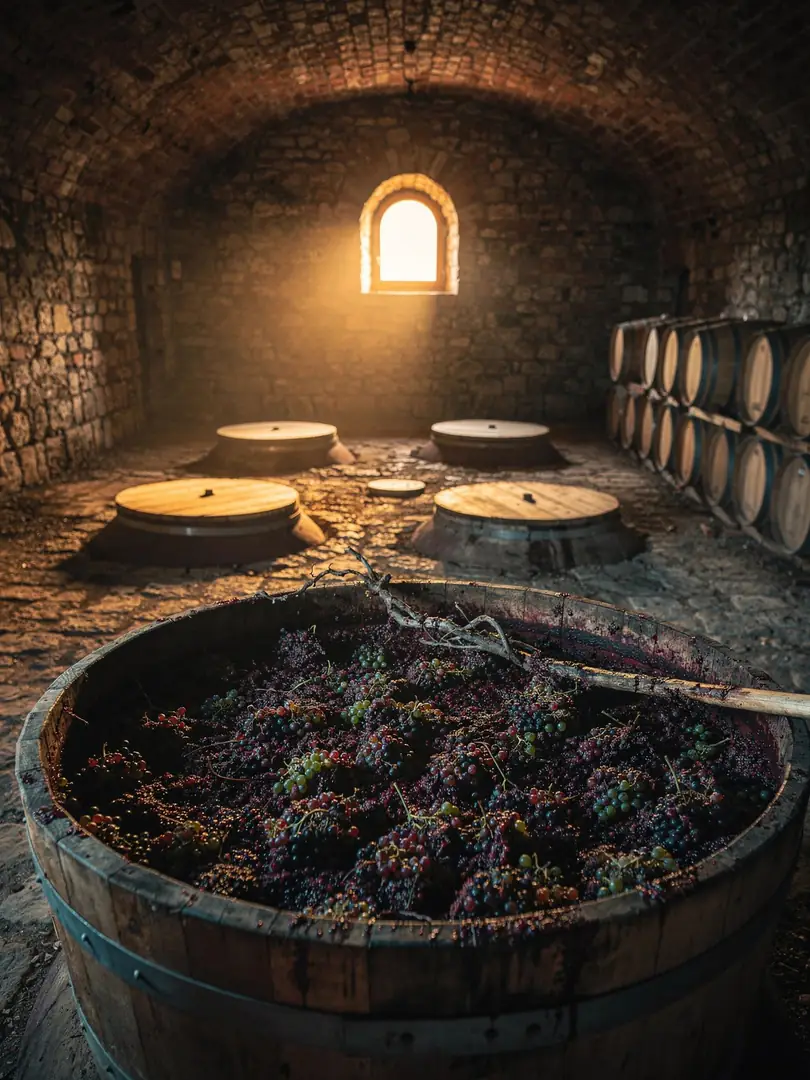
Pomace in the Clay Vessel
Mash & Fermentation
What happens to the pomace once the wine has been drawn off? In Kakheti, it's taken from the Qvevri, the buried clay vessel, and packed into clay pots or wooden barrels to ferment. Sealed airtight, it typically sits there for two to four weeks, according to common accounts. The airtight seal matters, since exposure to air would turn the alcohol into acetic acid and spoil the batch.
The vessel, egg-shaped and lined inside with beeswax, is buried up to its neck in the ground, where the temperature stays steady year-round, keeping the wine's fermentation calm—long before the pomace ever reaches the still.
During this time, yeasts convert the sugar still clinging to the skins and flesh into alcohol. Wild yeasts naturally live on the skins, and many home distillers rely on these rather than adding cultured yeast.
The amount of sugar determines how much alcohol ends up in the mash. Since most of the sugar was already used up in making the wine, the yield from pomace is comparatively modest. Methanol already forms in the mash from the pectin in the skins; every pomace brandy contains some, and the EU caps it at 1,000 grams per hectoliter of pure alcohol for pomace brandy.
The path to Brandy, by contrast, begins with an ordinary wine fermentation. The grape juice ferments out completely, until almost no sugar remains, and the dry, acidic wine then goes to the distillery.
Mistakes at this stage show up later in the glass. A mash left open too long smells of vinegar, one that ferments too warm loses aroma, and rotten spots in the pomace show up as a musty note in the finished spirit.