Carinthian Fruit Brandy
Region & History
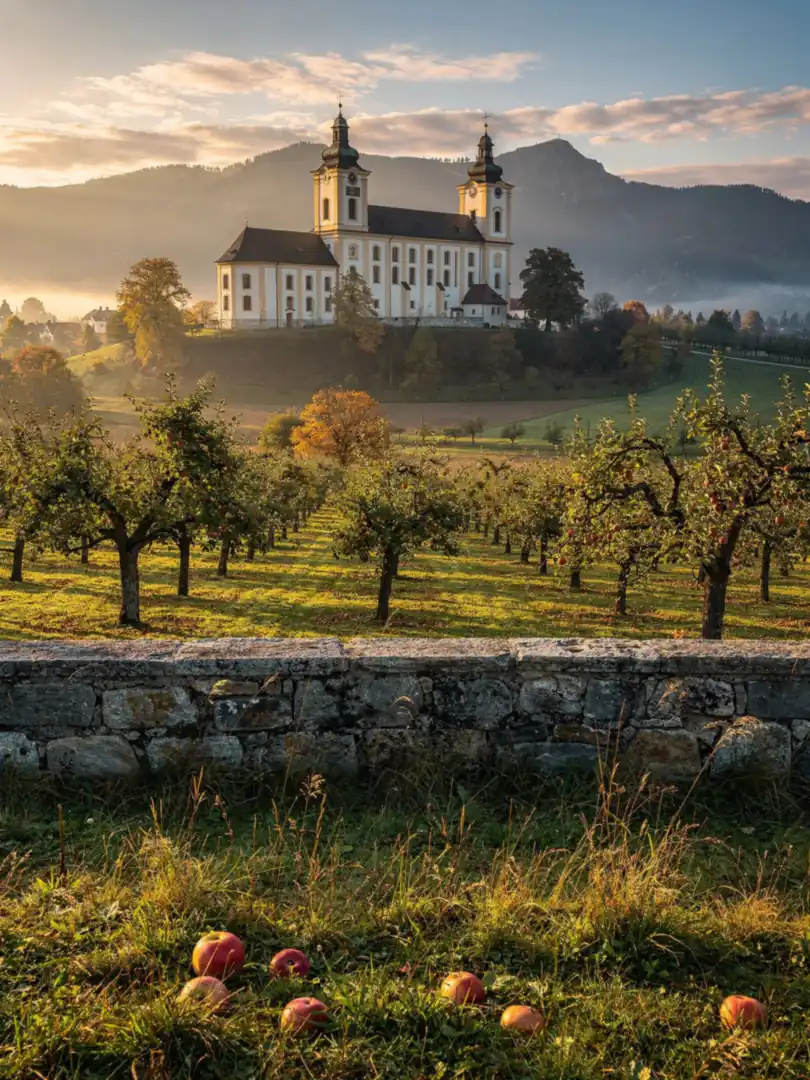
Ask about fruit brandy in the Lavanttal, and you'll first get a lesson on apples. The valley lies in eastern Carinthia between the Saualpe and Koralpe mountains, and its traditional orchard meadows grow the raw material for cider, apple wine, and brandies that are barely known outside the region.
According to Austria's Ministry of Agriculture, the valley's fruit-growing tradition dates back to the founding of St. Paul's Abbey in 1091. This long history gave rise to varieties such as Bohnapfel, Brünnling, and Renette, which still bear fruit today on old, tall standard trees. Farm operations turn their fruit into fruit brandies as well.
Distilling follows Austrian alcohol tax law. According to the Chamber of Agriculture of Upper Austria, a farmer with Abfindungsrecht—meaning a flat-rate taxed distillery—may produce up to 100 liters of pure alcohol per calendar year at a reduced rate. A higher rate applies to an additional 100 liters. Distilling without a permit remains illegal in Austria, as elsewhere.
The Lavanttaler Bananenapfel brandy is listed in the Austrian Ministry of Agriculture's register of "Traditional Foods." It does not appear in the EU register of protected geographical indications for spirits. What Austria calls "Edelbrand" is defined by the country's food code: a distillate made from fermented mash that has retained its aroma. If up to one-third of the alcohol comes from an agricultural source, the product must instead be labeled Obstschnaps (fruit schnapps).
Among the best-known names in Carinthian fine brandy is the Pfau distillery in Klagenfurt, founded by Valentin Latschen in 1987. According to the house, it grew from a small cellar still at the family's guesthouse into an operation that now bottles fine brandies, beer brandies, and whisky.