Glass, Steel, Cask
Maturation & Storage
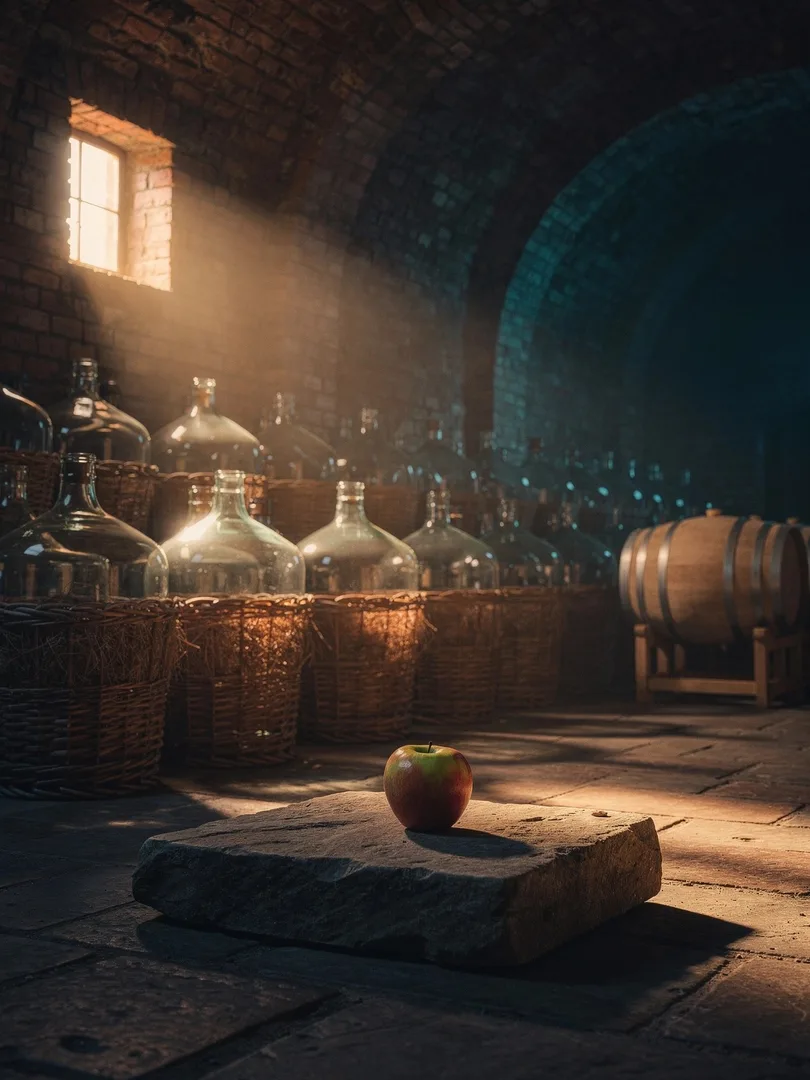
How long must a fruit brandy age? The law doesn't say. EU regulation requires no aging period for fruit brandies, so after distilling, an apple brandy from the Lavanttal usually sits in glass or stainless steel—vessels that impart no flavor of their own to the distillate.
There it rests until the sharp notes settle, and only then is it diluted with water to drinking strength. Coloring a fruit brandy isn't allowed. Sugar is permitted up to 18 grams per liter, but anyone focused on fruit character and purity leaves it out entirely.
Wood aging is still permitted, though. A fruit brandy may only carry caramel coloring for color adjustment if it has been in contact with wood for at least one year. According to the house, Pfau bottles both clear brandies and cask-aged expressions, and has distilled whisky since 2003, where cask maturation takes center stage.
Age statements on the label are tightly regulated. An age may only be stated if it refers to the youngest component and the aging took place under tax supervision. So terms like "old" or "Reserve" don't represent a fixed number—they're simply a claim made by the producer.
A young apple brandy showcases the fruit above all. Time spent resting in glass rounds it out without changing its color, since glass gives nothing back. Only cask aging turns the brandy amber and brings in vanilla and spice notes that have no place in a clear fruit brandy.