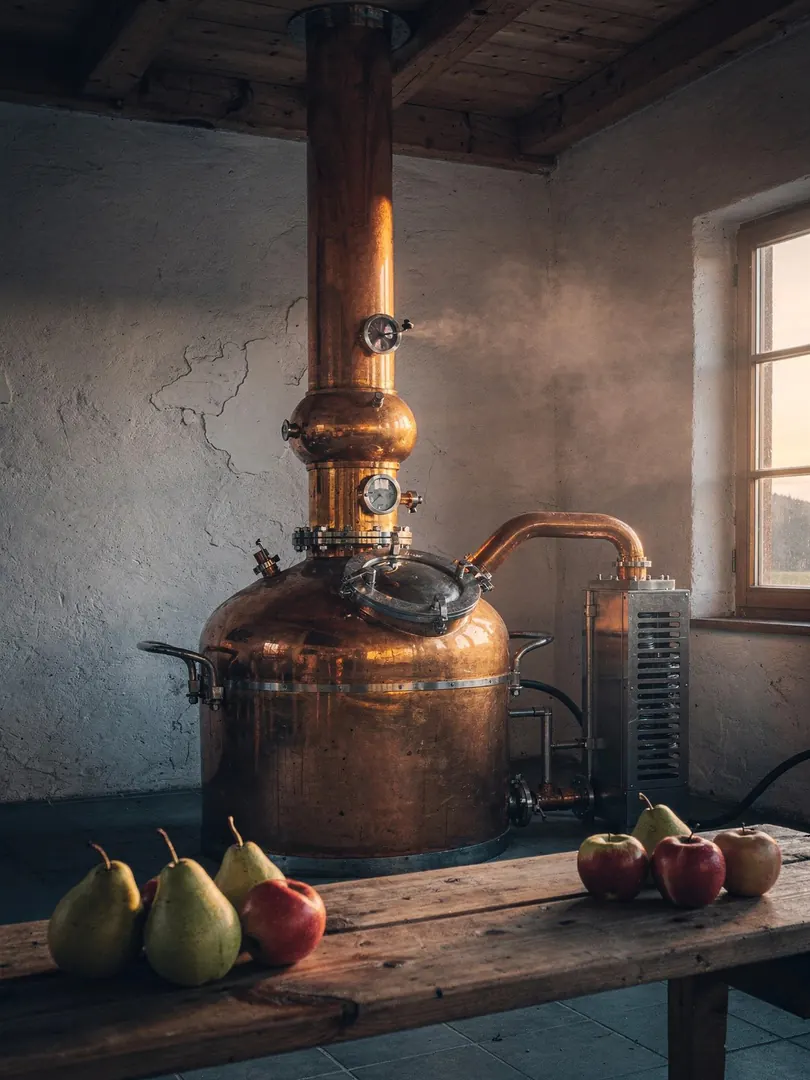
Still, Heads, Tails
Distilling
How does fermented apple mash become a fruit brandy? Through distillation. The mash is heated in the still; alcohol evaporates before water does, and the vapor condenses back into liquid in the cooling system. What remains is a distillate that carries the fruit's aroma in concentrated form.
Many fruit distillers in German-speaking countries work with a copper pot still topped with a rectifying column, which refines the distillate in a single pass. The classic method is double distillation: the first run, known as the low wine, is distilled a second time.
The distiller separates the distillate into heads, hearts, and tails. The heads come first, smelling sharply of solvent; the tails come last, tasting musty and of fusel oils. Only the heart, the middle cut, becomes the finished brandy. Exactly where a distiller makes these cuts defines the house style.
Methanol comes from the fruit's pectin, so it's already present in the mash and found in every fruit brandy. For apples and most pears, the EU sets a maximum of 1,200 grams per hectoliter of pure alcohol; for Williams pears, the limit is 1,350. The heads cut only partially reduces the methanol content.
Distilling is a craft that requires a license. In Austria—whether in Klagenfurt or the Lavanttal—distillers must register with the customs office or operate as a bonded distillery; private illicit distilling is banned, and the same holds true in Germany. Anyone with their own fruit but no distillery turns to a licensed operation instead.