Perry, Dirndl, Blossom
Food & Tradition
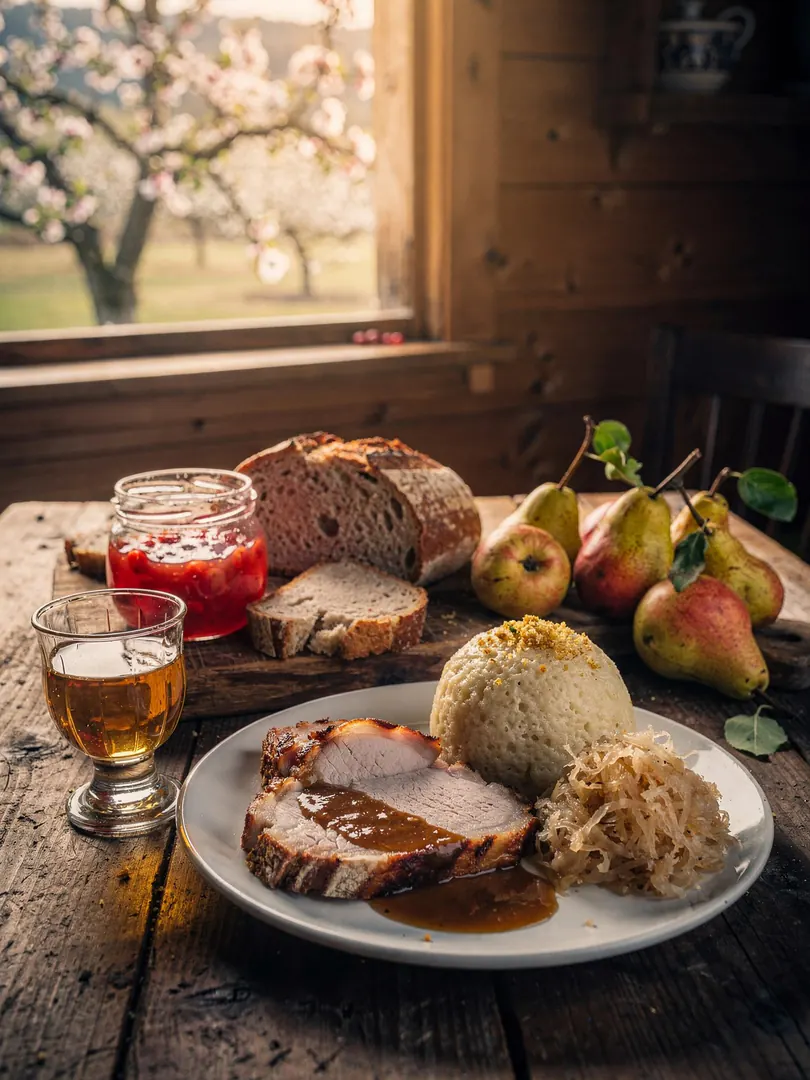
In the Mostviertel, a Mostbratl — roast pork prepared with perry — is traditionally served alongside a glass of Most or perry. The pear lends fruit and a light acidity that cuts nicely through the rich meat. A small pear brandy afterward works like a full stop at the end of the sentence.
In the Pielachtal, Dirndl goes into jam and juice, and the very same fruit becomes Dirndlbrand. In Frankenfels, Kirchberg an der Pielach, and Rabenstein, people have known this fruit since childhood. Because it's very tart raw, it needs sugar, time, and yeast to come into its own.
Does a schnapps after a meal really help digestion? The evidence points the other way, since alcohol actually slows gastric emptying. The feeling of relief is relaxation, not faster digestion. After Mostbratl and perry, a small pear brandy is a fitting close — not a digestif in the medical sense.
The region's biggest festival is the pear blossom season. When the trees along the Moststraße turn white in spring, Mostheurige taverns and farms open their doors, and the Mostbarone — recognized experts in Most culture — share their knowledge. Under the banner "Die Moststraße brennt," workshops explain the differences between brandy, spirit, and liqueur.
So the region lives off its fruit, and tradition follows the tree: blossom in spring, Dirndl harvest from mid-August, then pears, perry, and brandy. The pear shapes the Mostviertel's calendar; the Dirndl shapes late summer in the Pielachtal.