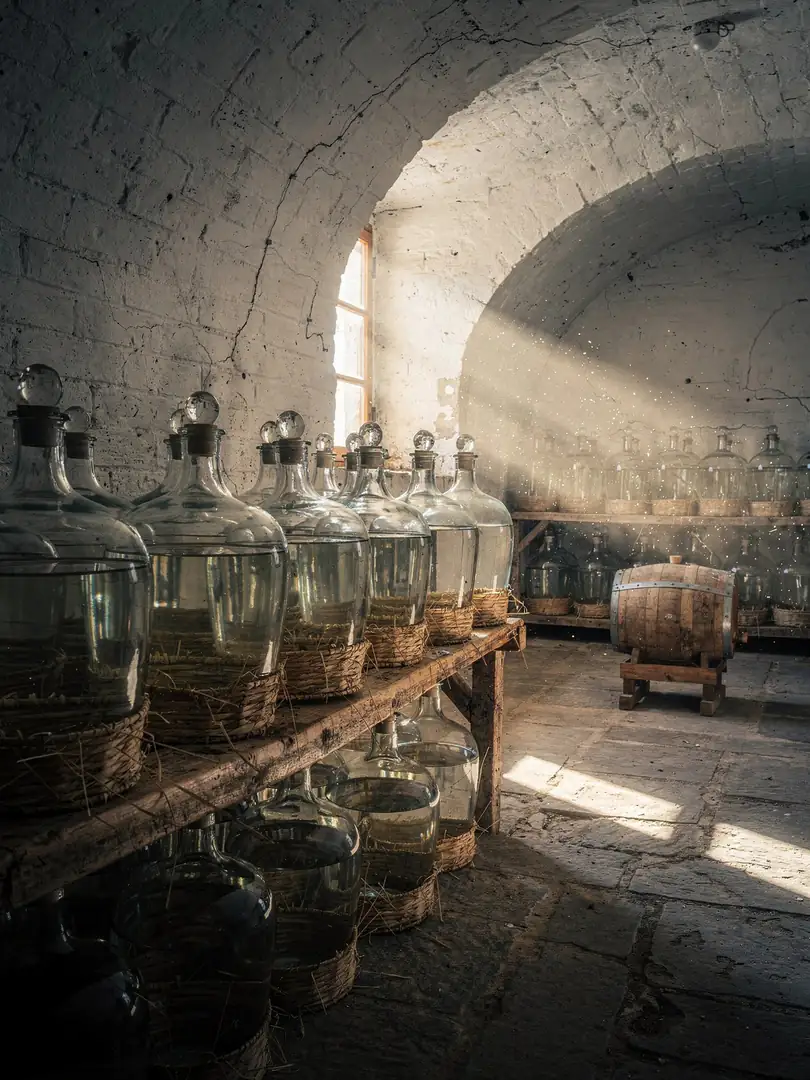
Stillness in the glass
Maturation & Storage
Fresh from the still, every pear brandy still seems rough and unsettled. Most fruit brandies are therefore rested in glass demijohns or stainless steel tanks, where they take on neither color nor wood character. For pear and Dirndl brandies, this is the standard approach — wood remains the exception.
After resting, which can run from several months to longer depending on the distiller, the distillate is reduced with water to drinking strength. The Original Pielachtaler Dirndlbrand is bottled at a minimum of 39 and a maximum of 45 percent alcohol. According to experts, a pear brandy will keep for many years without spoiling.
Those who do use wood generally choose oak, and clear rules apply. Fruit brandy may not be artificially colored — only caramel coloring is allowed, and only if the brandy has matured in contact with wood for at least a year. So a cask can contribute color and spice, but an additive straight from a bottle cannot.
Age statements on the label are a producer's own claim; the EU has no official age categories for fruit brandy the way it does for Cognac. If a producer states "aged" or gives a vintage year, it must refer to the youngest component in the brandy and must have been stored under tax supervision. So an Elsbeerenbrand labeled three years old cannot contain a single drop of younger distillate.
Whether a brandy rests in glass or in cask isn't a matter of quality. It's a stylistic choice: glass keeps the fruit clear and pure, while the cask makes it rounder and darker.