Fermenting and Waiting
Mash & Fermentation
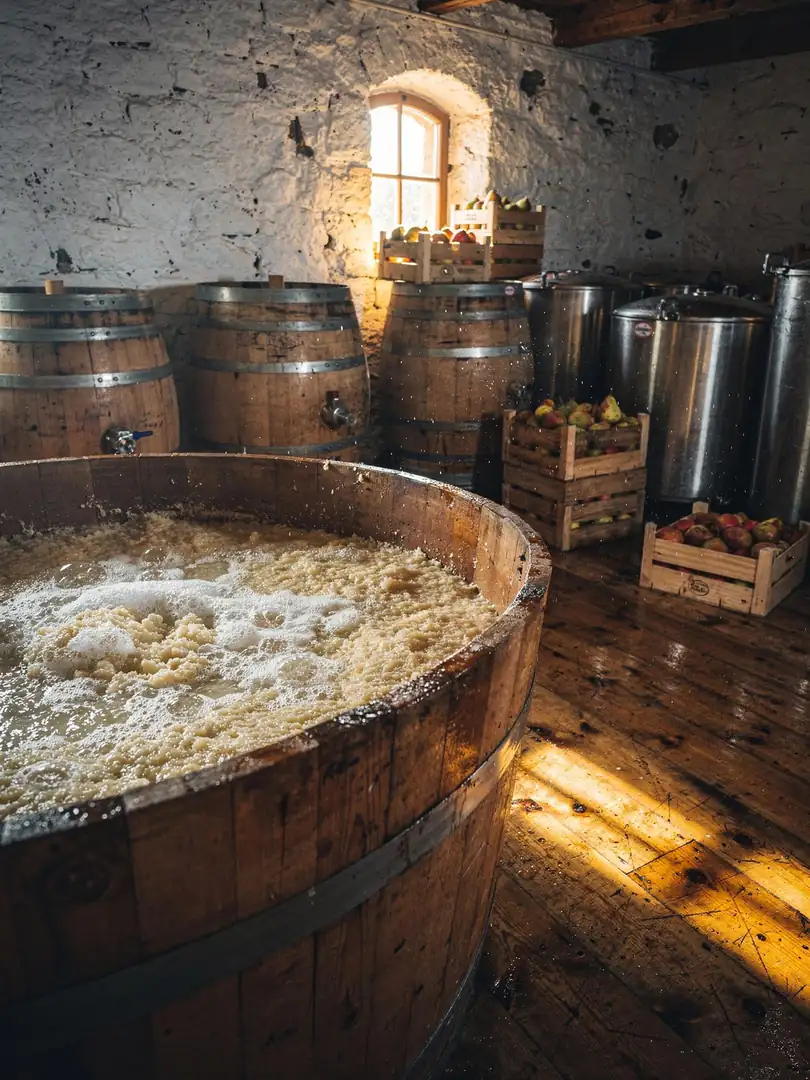
Pears, apples, or Kriecherl plums are first turned into mash—a pulp of crushed fruit. In it, yeasts convert the fruit sugar into alcohol. This is what legally distinguishes a fruit brandy (Obstbrand) from a fruit spirit (Obstgeist): with a fruit brandy, the fruit itself is fermented, without any added alcohol.
A fruit spirit works differently: unfermented fruit or berries are steeped in neutral alcohol, which draws out the aroma, and it's this infusion that gets distilled. This approach makes sense for fruits with too little sugar to ferment well, such as raspberries or sloes. The rowanberry appears on both lists: it may be distilled either as a fermented brandy or as a maceration spirit, in which case the label must state 'produced by maceration and distillation.'
Back to fermentation: depending on the fruit and temperature, it takes several weeks, and much is decided during this time. If the mash gets too warm or too dirty, off-flavors develop that the distiller can never fully remove later. That's why care before the first fire matters most on the farm: ripe, healthy fruit and clean barrels or tanks.
With stone fruit like the Kriecherl, the pits can stay in the mash, as they lend the brandy a subtle stone-fruit note. However, crushed pits release hydrocyanic acid, so its amount in the finished brandy is capped—at 7 grams per hectoliter of pure alcohol for stone fruit. A subtle hint of stone is desirable; too strong a note is considered a flaw.
Methanol actually forms already in the mash, since it comes from the fruit's pectin rather than from distillation itself. Every fruit brandy therefore contains some methanol, and the EU sets maximum limits: 1,200 grams per hectoliter of pure alcohol for apple, plum, and most pears, and 1,350 for rowanberry. Legally produced fruit brandy poses no risk of blindness from methanol; the real danger lies in adulterated bootleg alcohol.