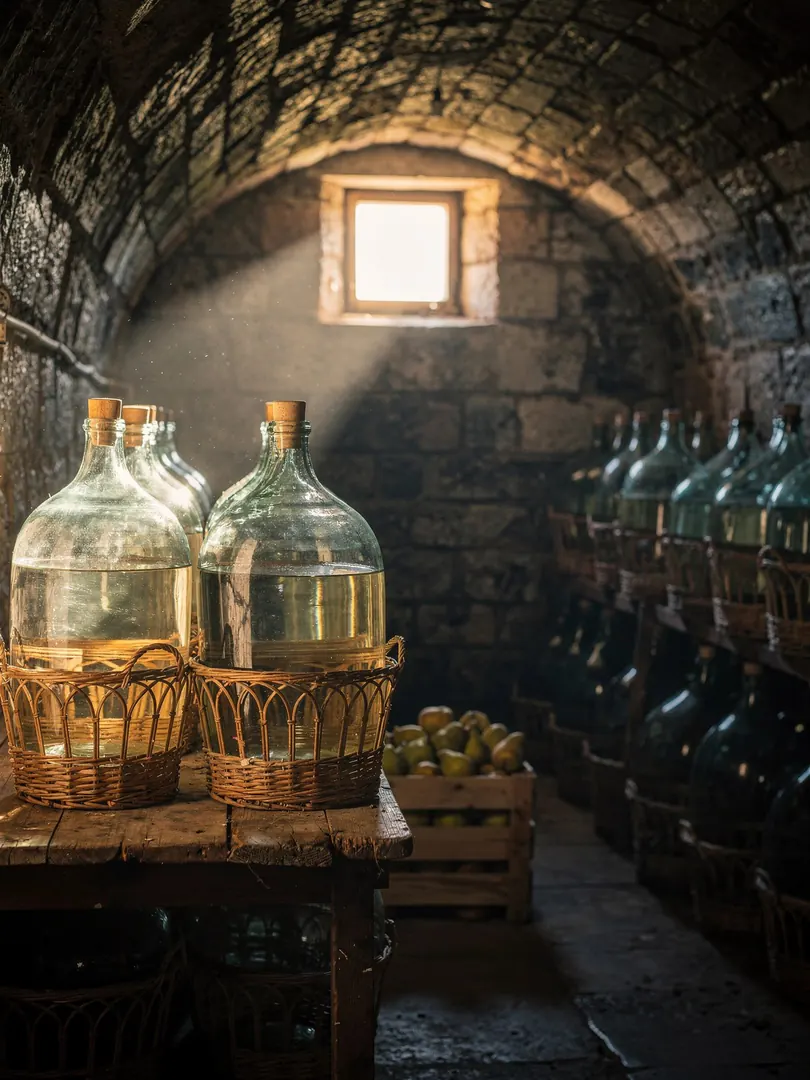
Resting in Glass
Maturation & Storage
A Styrian fruit brandy is usually not aged in wood; instead, it rests in glass demijohns or stainless steel tanks. The goal is to preserve the pure fruit aroma, since oak would contribute color and spice that wouldn't always suit a varietal brandy made from pear or apple. 'Maturation' here means rest rather than barrel aging.
How long must a fruit brandy mature? The EU sets no minimum age requirement for it. Brandy made from wine (Weinbrand) is different: it must spend at least six months in oak barrels under 1,000 liters, or one year in larger vessels. No one may color a fruit brandy; caramel coloring is only permitted if it has had at least one year of contact with wood.
Freshly distilled, the spirit often tastes sharp and unsettled. A few months of rest let the aromas come together, after which the distiller dilutes the brandy down to drinking strength with water. For Styrian Hirschbirne Brandy, the register requires a minimum of 38 percent alcohol and describes a youthful bouquet: here, freshness matters more than age.
Labels bearing terms like 'old' or 'Reserve' reflect claims made by the producer. Any stated age refers to the youngest component in the blend, and maturation must have taken place under tax supervision. Distillers may sweeten a fruit brandy with no more than 18 grams per liter.
Glass and stainless steel are flavor-neutral, so a brandy can rest in them for a long time without picking up outside influences. Wood remains permitted and becomes a stylistic choice for fruit brandies: it adds color, rounds out the spirit, and brings notes of vanilla and spice—but it also changes the character of a varietal brandy. Choosing to age in a glass demijohn means choosing the fruit over the barrel.