Juice and Root
Mash & Fermentation
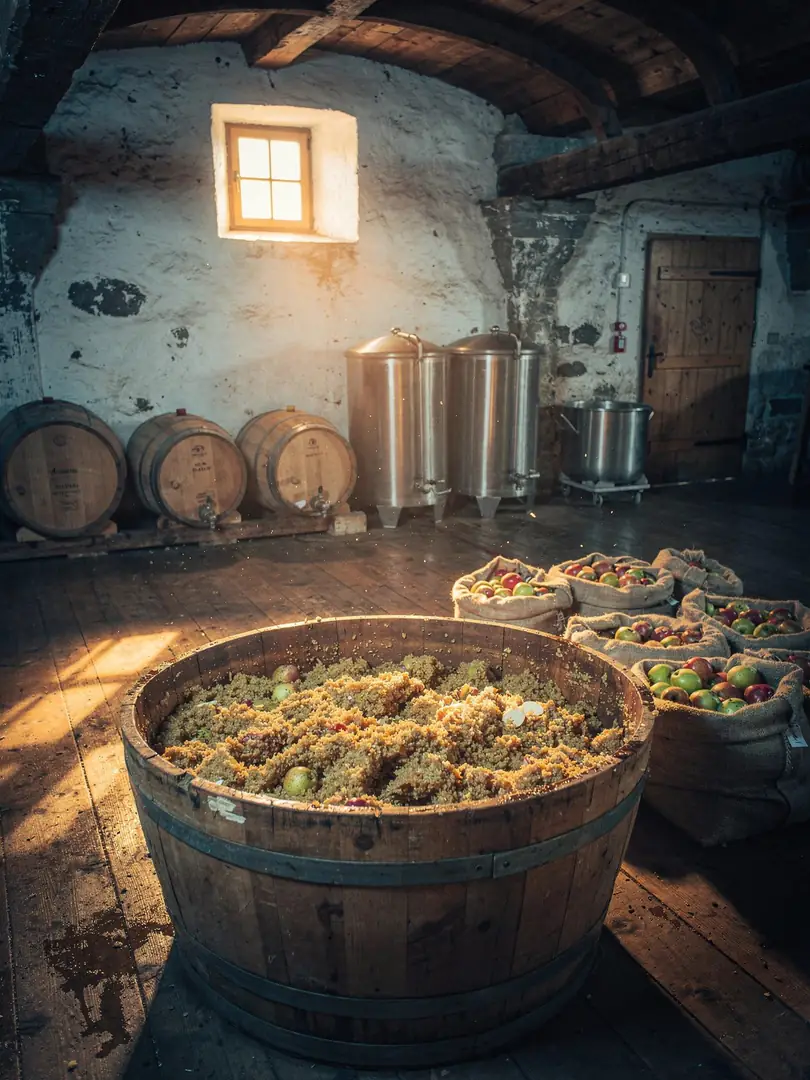
In autumn, the preparations for the distilling season begin in Tyrol. Apples and pears are milled, the fruit sugar enters fermentation along with the mash, and yeast turns that sugar into alcohol. Later, the brandy will only taste as pure as the mash was clean.
With the stubble turnip, things work differently, since it brings little sugar of its own. The turnips are sliced and pressed, the juice is boiled down to about a third of its volume, and after yeast is added it ferments for one to two days until fermentation is complete. Then it goes into the still.
With Vogelbeerbrand, two methods are possible, and they're legally distinct. Classic Vogelbeerbrand is made from fermented mash, like a fruit brandy. There's also a version "obtained through maceration and distillation," in which the berries are steeped in alcohol. In that case, this must be stated on the front label, and no more than 20 liters of alcohol may be added per 100 kilograms of berries.
Enzian is produced from fermented roots, and under EU rules, ethyl alcohol may be added in the process. Roots and turnips therefore demand patience and care from the distiller, since they behave quite differently from fruit: there's no juicy flesh that begins fermenting on its own, and the mash must be guided with experience.
The cleaner the starting material, the fewer off-notes the mash carries into the brandy. Anyone who processes fruit, turnip, or root while fresh and unspoiled has already completed the most important part of the work before it ever reaches the still—because whatever off-notes fermentation produces, the distiller can't remove them later.