Settling in the Glass
Maturation & Storage
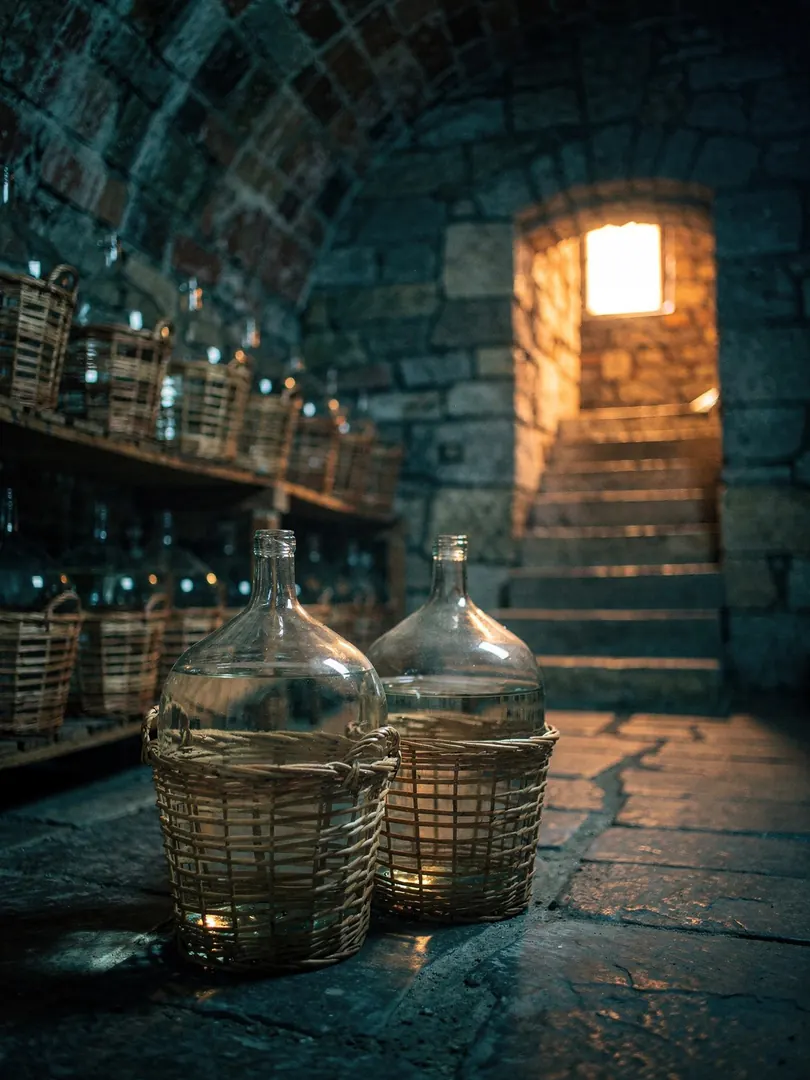
Freshly distilled, Fraxner Kirsch still tastes sharp and unsettled, its aromas not yet fully integrated. With rest, it becomes rounder, and the fruit comes through more clearly. It therefore rests initially, usually in glass demijohns or stainless steel tanks that don't alter the flavor. Wood aging is permitted for fruit brandies, but rarely used for Kirsch, since it would mask the fruit.
How long a brandy rests is up to each distillery. Fruit brandy has no prescribed age categories like VS or XO in Cognac. Terms like 'alte' or 'Reserve' are house designations. If a label states a vintage year, it must refer to the youngest component in the blend.
Finally, the brandy is reduced with water to drinking strength. For Fraxner Kirsch, this lies between 40 and 45 percent ABV according to local sources. The water is added slowly, and the brandy is left to rest once more afterward so that alcohol and aroma can integrate.
In Lustenau, you can see how broad a range can be. Alongside clear fruit brandies, the Freihof distillery also produces liqueurs and specialty spirits, while the private Hämmerle distillery focuses on classic brandies from cherry, raspberry, apricot, and Williams pear.
Those familiar with whisky expect barrel aging and a golden color. For clear fruit brandy, the goal is the opposite: it stays colorless, so the fruit comes through in the glass without any wood character. Coloring is prohibited, and caramel coloring for color adjustment is only allowed after at least one year in wood.