Distilled Once
Distillation
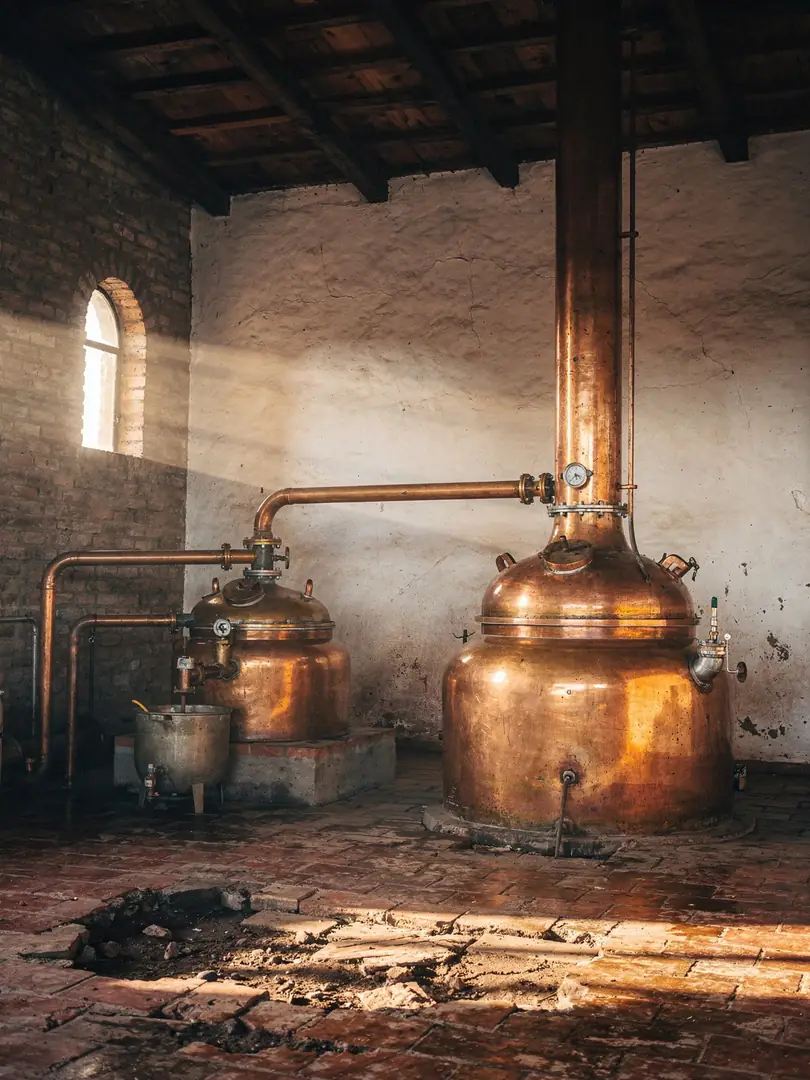
In the distillation houses of Ica, copper gleams everywhere. There stand the Falcas, as Peruvians call their stills, complete with kettle, head, and condenser. They're built from copper, and newer setups also from stainless steel. Copper binds unpleasant sulfur notes and leaves the spirit cleaner. The wine goes into the kettle, is heated, and the alcohol rises as vapor before cooling back into liquid in the condenser.
How many times is Pisco distilled? Exactly once. Unlike Cognac, which goes through two passes, the wine passes through the still only a single time, with no intermediate step. After that, the distillate is meant to come out at drinking strength right away. The standard makes no provision for a second distillation.
As with any spirit, the distiller divides the distillate into three parts. First comes the heads, sharp-smelling and cut away. Then follows the heart, the middle run, and that's the Pisco. Finally comes the tails, carrying heavy, oily compounds; these too are separated and discarded. A small amount of methanol always forms from the fruit's pectin, which is why legal limits exist that properly made spirits must respect.
Because no water may be added after distillation, the cut has to be exact. The distiller decides by smell, taste, and measurement when the heart ends, so the alcohol lands within the permitted range of 38 to 48% ABV. Cut too early, and you lose richness; cut too late, and bitter notes creep into the glass.
At some bodegas, such as Tacama, the Falcas can be viewed up close on guided tours. For anyone tempted to experiment at home: in Germany, private distilling without a permit is illegal. The process is described here to help you understand what's in the glass, not to be replicated.