Must, Quickly Fermented
Mash & Fermentation
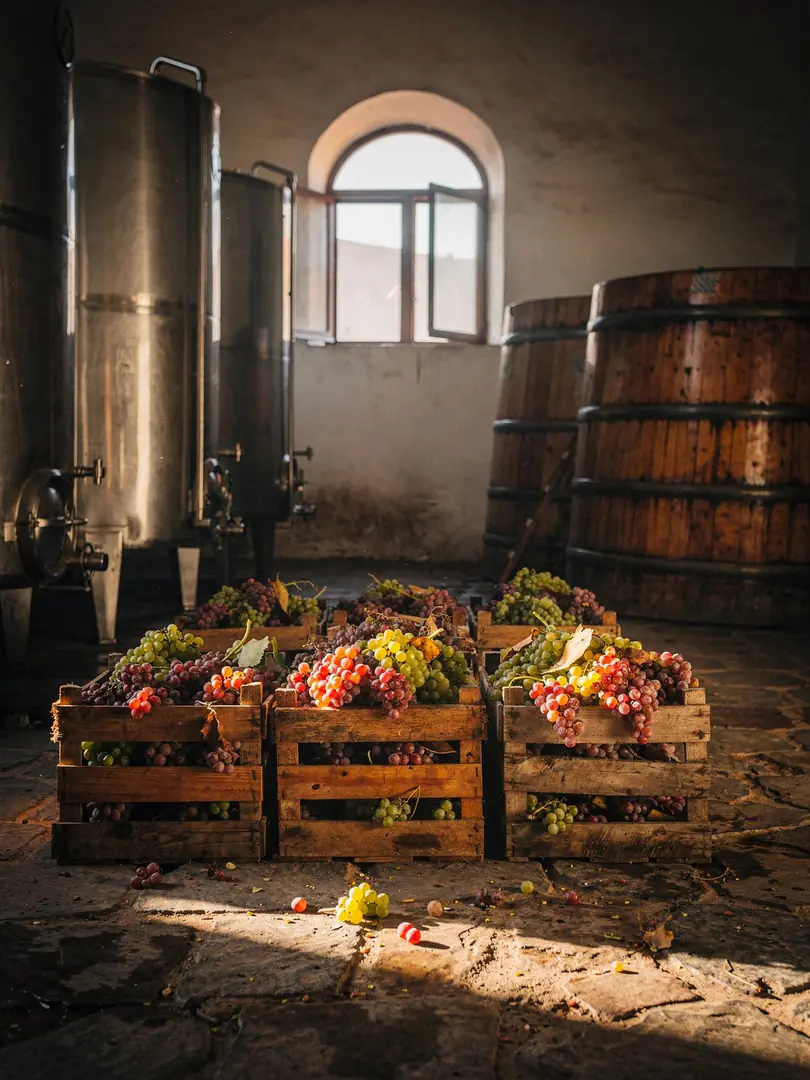
Remarkably little time passes in Peru between harvest and distillation. The standard speaks of freshly fermented must, and that's exactly what it means: what gets distilled is a young, unfinished wine that no one ages or refines. The grapes are pressed, and the juice flows into the fermentation vessels. On some old haciendas, the Lagares, stone basins, still serve as a reminder that grapes were once trodden here by foot.
What happens during fermentation? Yeasts convert the grape sugar into alcohol and carbon dioxide, turning the must into a young, dry wine known in the trade as base wine. Today this usually happens in stainless steel tanks. Depending on the house, either the natural yeasts from the grape skins do the work alone, or the producer adds selected yeasts.
The standard allows no additives. Neither sugar nor flavorings may enter the must or the finished spirit; the alcohol must come entirely from the sugar in the grapes. That makes the harvest the decisive moment: ripe, healthy berries are the foundation, and whatever was neglected in the vineyard can't be fixed later.
Mosto Verde, the green must, takes a different path. Here the must is distilled before fermentation is complete, leaving some residual sugar behind. Because the must then contains less alcohol, the distiller needs significantly more of it to produce the same amount of Pisco. That costs grapes, but in return a Mosto Verde is considered softer and fuller on the palate.
Cognac and Armagnac also begin with a base wine, but there it's deliberately high in acidity and low in alcohol. In Ica, the aim is purity and fruit. Clean tanks, healthy grapes, and a fully fermented wine are the whole art here, before the Falcas are fired up.