Wine and Pomace
Mash & Fermentation
The base wine for Aguardente DOC Lourinhã isn't meant for drinking, but serves as a raw material. It should be high in acidity and moderate in alcohol, because the distillate later takes on the wine's aroma. Even EU regulations for spirits require that only wine, fortified wine, or wine distillate go into the brandy, not neutral alcohol.
In the Douro, a clock is ticking. The wine must be distilled by the end of March following the harvest, as specified in the regulations for Aguardente de Vinho Douro. The distiller is thus bound to the yearly cycle even before the first still is heated.
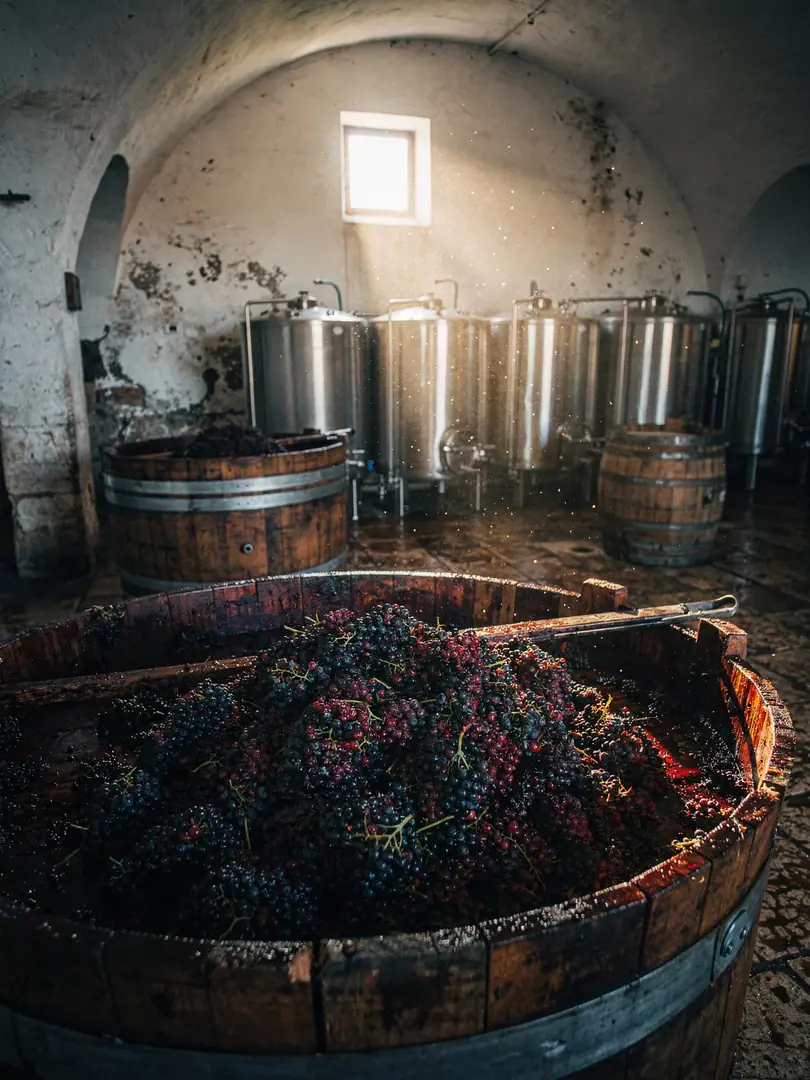
With Bagaceira, everything begins with a residue. After pressing, skins, seeds, and stems remain. Pomace from red wine has already fermented on the skins and contains alcohol, while pomace from white wine was pressed before fermentation and must still ferment. Yeast converts the residual sugar in the skins into alcohol.
Bairrada's specifications call for fresh, fermented pomace that has not been ensiled, meaning not stored for months. The reason lies in the taste: pomace stored too long spoils easily, and off-flavors end up in the brandy later.
One factual figure is worth noting. Under EU law, pomace brandy may contain up to 1,000 grams of methanol per hectoliter of pure alcohol, while wine brandy is limited to 200. The reason is the pectin in the skins, from which methanol forms already in the mash. Bairrada's specifications set a much stricter limit of 400 grams.