Damasson rouge
Fruit & Raw Material
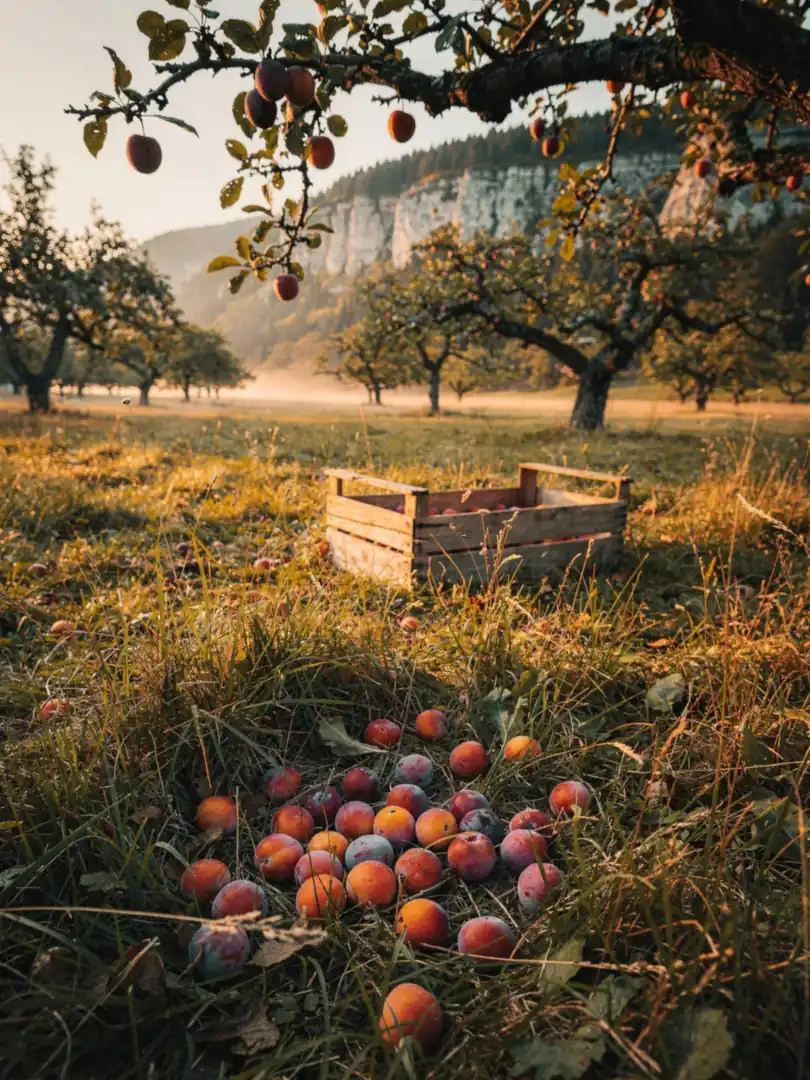
The plum from which Damassine is distilled is called Damasson rouge and is roughly the size of a mirabelle. Its skin is pink to dark red, speckled with dark dots on the sunny side, while the shaded side tends more toward yellow-orange. A heavy, bluish bloom covers it all.
When ripe, the fruit is fleshy and juicy, and the flesh separates easily from the pit. That small pit later stays in the fermenting vessel, since the fruit may not be pitted.
Harvesting here doesn't mean what it usually does. The plums aren't picked, and the branches aren't shaken. Instead, producers gather the ripe, fallen fruit by hand every day, dropping to every other day at the start and end of the season. Livestock must be moved out of the orchards at least two weeks before the expected start of harvest, and the grass is mown. Depending on the site, harvest runs from mid-July to the end of September.
The trees grow as fruit hedges or scattered through traditional orchards. They're propagated by root suckers, cuttings, mounding or grafting — laboratory propagation is forbidden. That's why the label later distinguishes between fruit from grafted trees and from wild, ungrafted ones. The crown must begin at least one meter above the ground so the fruit falls cleanly.
For new plantings, the specifications call for planting material of various types from several orchards within the region, to preserve the diversity of Damassine trees across Jura. Producers work either under integrated production guidelines or organically.